
How to know if you tore your ACL?

Medically Reviewed by
Dr. Hesham Al-Khateeb
FRCS (Orthopaedics) · UK Board-Certified
Wondering if that sudden knee pain is just a minor sprain or something more serious? Recognizing the signs of an ACL tear early is crucial for proper treatment and a full recovery.
From swelling, bruising, and limited movement to instability or a feeling that your knee might “give out,” we’ll guide you through how to know if you tore your ACL, what symptoms should never be ignored, and why seeking timely medical attention can make all the difference in preventing further injury.
What is the ACL?
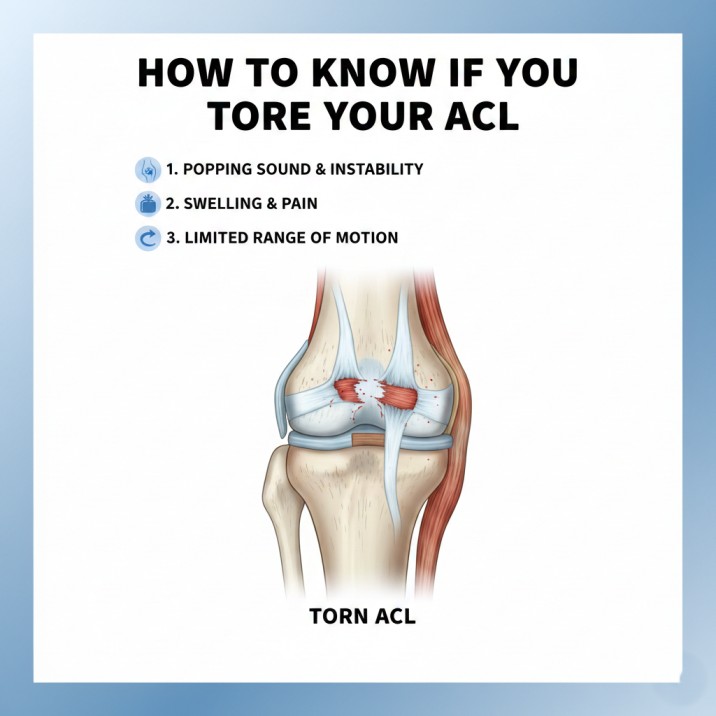
The Anterior Cruciate Ligament (ACL) is one of the most important ligaments in your knee. It connects the thigh bone (femur) to the shin bone (tibia) and plays a major role in providing stability to the knee joint.
The ACL helps control the forward movement of the tibia and prevents excessive twisting or rotation of the knee. Because it supports quick changes in direction, jumping, landing, and sudden stops, the ACL is especially important for athletes and active individuals.
When this ligament is stretched beyond its limit or torn, often due to sudden twisting movements, awkward landings, or direct impact, the stability of the knee is compromised. This is why ACL injuries can make the knee feel weak, unstable, or unable to bear weight.
Symptoms of an ACL tear in knee
Recognizing the symptoms of torn ACL is important for understanding how serious the injury may be. The following are the key signs that you tore your ACL:
A loud popping sound at the time of injury: Many people hear or feel a distinct “pop” when the ACL tears, often followed by immediate pain.
- Swelling in the knee: The knee usually swells within the first few hours. Internal bleeding and inflammation cause this swelling.
- Severe pain and discomfort: Pain can be sharp or intense, especially when trying to stand, walk, or shift weight onto the injured leg.
- Limited mobility: Movement becomes difficult, and bending or straightening the knee may feel restricted or painful.
- Knee instability or giving out: The knee may feel unstable or unable to support your weight, a common warning sign of ACL damage.
- Tenderness around the knee: The area may feel sensitive to touch, with mild bruising sometimes developing within 24–48 hours.
Other ACL injury symptoms can include difficulty running, a feeling of looseness in the joint, and occasional locking of the knee.
Common causes of an ACL tear injury
ACL injuries often happen when activities place sudden or excessive stress on the knee. These include:
- Abrupt deceleration and quick changes in direction (cutting)
- Twisting the knee while the foot is being planted
- Improper landings following a jump
- Coming to a sudden stop
- Muscle weakness or imbalances
- Direct blows to the knee or collisions, such as during football tackles
When the ACL is overstretched or forced beyond normal limits, it may partially or completely tear.
How to know if you tore your ACL: Self-assessment tips
While only a medical professional can diagnose you, some checks may help you understand if you have an ACL tear:
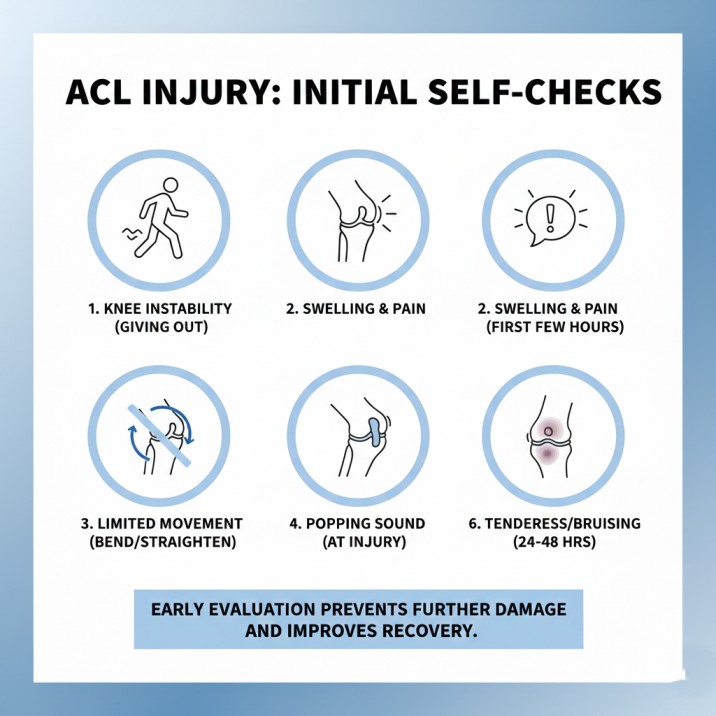
- Try standing or walking to check for instability or if your knee gives out.
- Observe your knee for swelling within the first few hours after the injury.
- Gently bend and straighten your knee to assess for pain or limited movement.
- Recall if you heard or felt a popping sound at the moment of injury.
- Notice if your knee feels wobbly, loose, or unable to support weight.
- Check for tenderness or bruising around the knee within 24–48 hours.
Early evaluation ensures the correct diagnosis, whether it’s a sprain, partial tear, or full ACL tear. It also helps prevent further damage to the knee joint. Prompt treatment improves long-term recovery and reduces the risk of chronic instability.
Read More: How Long Does an ACL Tear Take to Heal Without Surgery?
How doctors diagnose an ACL tear
To confirm an ACL injury, your doctor will review your symptoms, assess your knee’s stability, and may order imaging tests:
- X-rays to rule out bone fractures
- MRI scans to visualize ligament and cartilage damage
- Physical tests such as the Lachman, pivot shift, and anterior drawer tests to evaluate ACL function
- Observation of swelling and range of motion to assess joint health
Treatment options for an ACL tear
The right treatment for an ACL tear depends on injury severity, your lifestyle, and activity level. Options range from non-surgical approaches to surgery:
- Physical therapy and rehabilitation: For partial tears (incomplete ligament tears) or individuals who are less active, physical therapy can help restore knee strength, flexibility, and stability. A structured rehabilitation program can help reduce the risk of further injury and improve long-term knee function.
- Knee brace: A brace provides extra support and stability during activities or sports. It’s often used with physical therapy to help protect the knee during healing.
- Arthroscopic ACL reconstruction: This minimally invasive surgery replaces the torn ACL with a graft from your own tissue or a donor. It’s usually recommended for complete tears or for knee instability. Post-surgery rehabilitation is crucial for regaining full function and returning to sports.
- ACL repair: In select cases, the torn ACL can be repaired rather than reconstructed, especially if the tear is near the ligament’s attachment. This procedure is usually combined with physical therapy for the best recovery outcomes.
Don’t ignore your knee pain – Get expert ACL treatment today
Recognizing the signs of torn ACL is the first step toward a full recovery, and seeking expert care is essential.
Dr. Hesham Al‑Khateeb is a highly experienced orthopedic surgeon in Dubai, specializing in knee injuries, sports medicine, and ACL reconstruction. He provides personalized treatment plans for athletes and active individuals, helping them regain knee stability and safely return to peak performance.
If you’re experiencing pain, instability, or other symptoms of an ACL injury, don’t wait; book an appointment with Dr. Hesham today.
FAQs
Common signs of ACL tear include a popping sound at the time of injury, swelling, severe pain, limited mobility, knee instability, and tenderness around the knee.
Sprained ACL symptoms are usually milder with less swelling and instability. Torn ACL symptoms are more severe and often include a popping sound, rapid swelling, and difficulty bearing weight.
Self-assessment can help identify signs of injury, including swelling, instability, limited motion, tenderness, and a popping sensation. However, an MRI is required for a definitive diagnosis.
Symptoms of torn ACL include sudden knee pain, swelling, instability, difficulty walking or bearing weight, limited motion, and tenderness around the joint. If multiple signs are present, seek professional evaluation immediately.
About the author

Dr. Hesham Al-Khateeb
FRCS (Trauma & Orthopaedics) – UK
UK Board-Certified
15+ Years Experience
DHA Licensed – Dubai
Knee & Hip Specialist
Dr. Hesham Al-Khateeb is a UK board-certified orthopaedic surgeon specialising in knee and hip conditions, including knee replacement, ACL reconstruction, meniscus repair, cartilage restoration, and hip replacement surgery. Trained and certified in the United Kingdom, he brings internationally recognised surgical expertise to patients across Dubai and the GCC.
Currently practising at Emirates Hospitals Dubai, Dr. Hesham is known for personalised, evidence-based care — combining the latest minimally invasive and arthroscopic techniques with a focus on restoring long-term joint function and quality of life.
Medical Disclaimer
This article is for informational purposes only and is not a substitute for professional medical advice, diagnosis, or treatment. Always seek the advice of a qualified health provider with any questions you may have regarding a medical condition.
Medically reviewed by Dr. Hesham Al-Khateeb