
Can a Knee Cartilage Repair Without Surgery?

Medically Reviewed by
Dr. Hesham Al-Khateeb
FRCS (Orthopaedics) · UK Board-Certified
Do you feel a persistent ache during your morning jog or ‘feel locked’ while climbing stairs? When the diagnosis is cartilage damage, you often jump to the operating table. This often leads to an important question: can knee cartilage repair without surgery?
The good news? Not every cartilage injury requires surgery. With advances in regenerative medicine, targeted rehabilitation, and personalized orthopedic care, many patients can now explore knee repair without surgery, especially when treatment begins early and is guided by an experienced specialist.
In this blog, we’ll explore how cartilage heals, what cartilage regeneration is, and when to choose non-surgical cartilage repair.
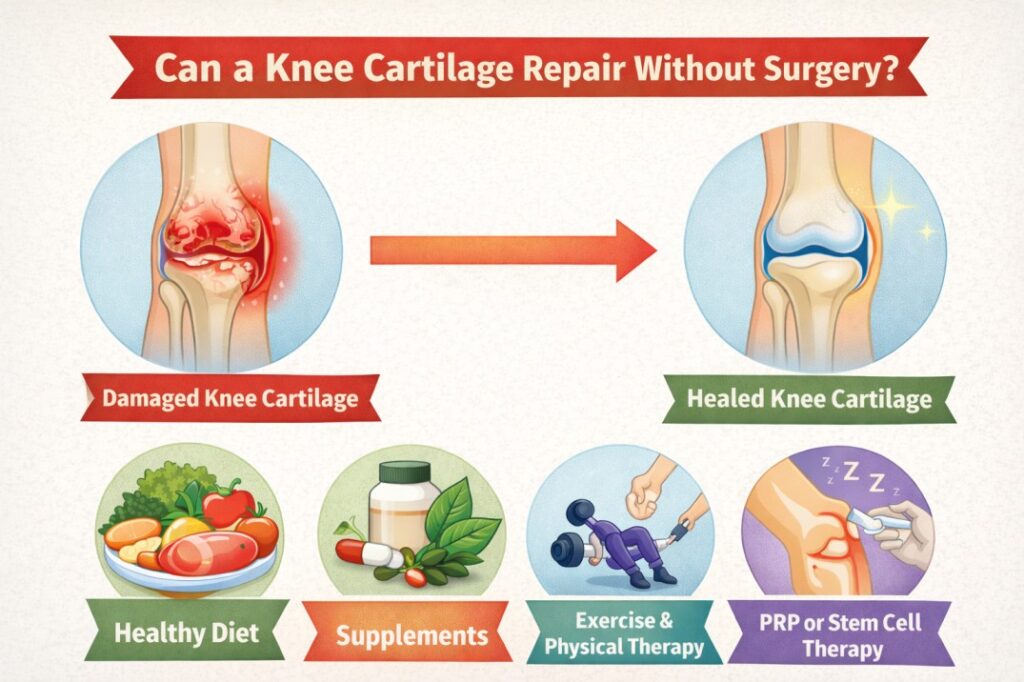
Knee cartilage: an overview and why it matters.
Cartilage is a smooth and rubbery tissue that cushions the ends of your bones where they meet at the knee joint. Unlike other body tissues, cartilage doesn’t have its own blood supply, which makes natural healing particularly challenging. Many patients ask: can cartilage repair itself?
When healthy, the cartilage absorbs shock and reduces friction. When damaged, pain, swelling, stiffness, and instability often follow.
Cartilage damage may occur due to the following reasons:
- Sports injuries or trauma
- Wear and tear (early osteoarthritis)
- Misalignment or repetitive stress
- Previous knee injuries or surgeries
A Critical fact to know – Adult cartilage has an extremely limited self-healing capacity. Once damaged, it rarely regenerates on its own. However, modern medicine has developed several promising approaches to support cartilage regeneration and manage symptoms effectively without undergoing surgery. |
Can cartilage repair itself? What science really says
A common question patients ask is can cartilage regrow, or can knee cartilage grow back naturally?
The honest answer is nuanced.
Cartilage does not regenerate easily on its own, but under the right conditions, the body can stimulate cartilage regeneration to a limited degree. This is why modern orthopedic care focuses on creating the right biological and mechanical environment for healing.
In early or moderate damage, non-surgical treatments can:
- Reduce inflammation
- Improve joint mechanics
- Encourage knee cartilage regeneration
- Slow or halt further deterioration
This makes knee cartilage repair without surgery a realistic goal for many patients.
How to regenerate knee cartilage naturally?
Patients often ask this question: how to regenerate knee cartilage naturally or how to rebuild cartilage without invasive procedures. While cartilage cannot fully regrow like other tissues, certain strategies can support healing and joint health.
Physical therapy and targeted exercise
Physical therapy is one of the most effective conservative approaches to support your knee without surgery. Exercises won’t directly regrow knee cartilage without surgery, but it can:
- Strengthen the surrounding knee muscles and reduce stress on the damaged cartilage.
- Reduce inflammation and pain
- Improves alignment and joint stability.
How to rebuild cartilage function? Low-impact activities such as cycling, swimming, or targeted strengthening improve cartilage function rather than full regeneration. |
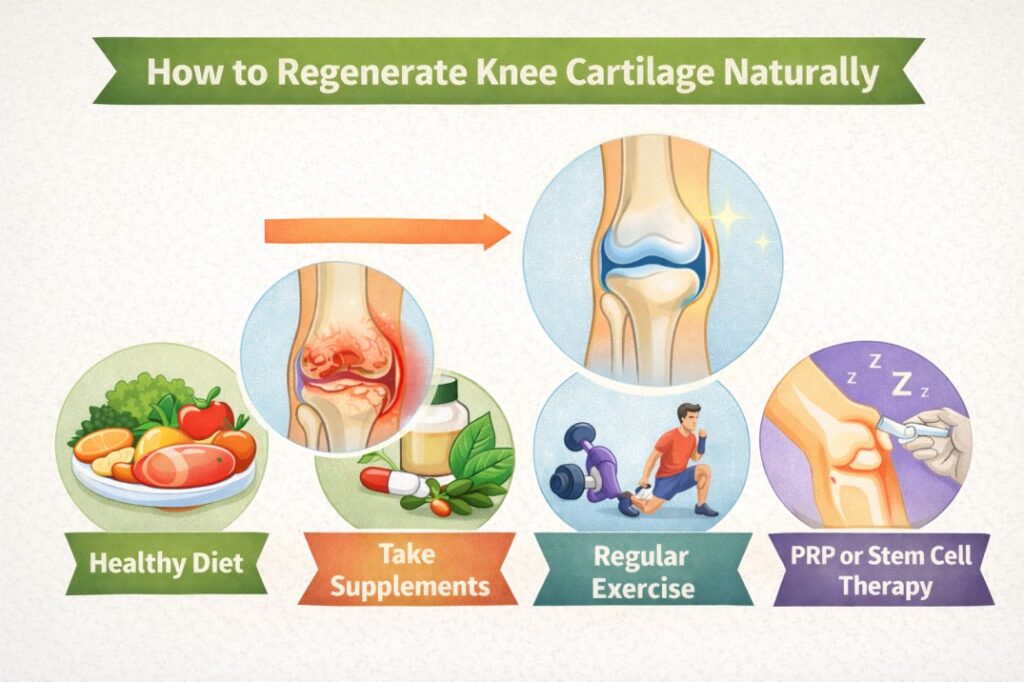
Anti-inflammatory diet and nutritional support
While diet alone cannot rebuild knee cartilage, following proper nutrition may support your efforts in knee cartilage regeneration.
What should you include in your nutrition plan?
- Glucosamine and chondroitin: Popular supplements that may support cartilage health
- Omega-3 fatty acids: They reduce inflammation throughout the body
- Turmeric and Ginger: Reduce the enzymatic breakdown of existing cartilage.
- Vitamin C: Essential for collagen production
- Vitamin D: Supports bone and joint health
Weight management
The Weight-Bearing Reality For every one pound of body weight you lose, you remove four pounds of pressure from your knee joints. This simple physiological fact is often the foundation for how to regenerate knee cartilage naturally. |
Weight loss is one of the most effective interventions for knee repair without surgery, reducing mechanical stress and inflammation simultaneously.
The above-mentioned conservative approaches may help patients regrow knee cartilage without surgery in mild cases, especially when guided by a knee specialist.
Can you rebuild cartilage with regenerative medicine?
Platelet-Rich Plasma (PRP) Therapy
PRP emerged as a promising option for knee cartilage repair. The treatment involves extracting your blood, concentrating the platelets, and injecting them into the knee area.
While research is ongoing, many patients experience reduced pain and improved function. It may not “grow back” an entire centimeter of lost tissue, but it can significantly improve the quality of the existing environment and stop further decay.
Hyaluronic Acid Injections
The injection is also called “gel injections” or viscosupplementation. Hyaluronic acid treatments can help lubricate the knee joint and reduce friction between bones.
While they don’t rebuild cartilage directly, these injections can provide significant relief for patients asking how to regenerate knee cartilage naturally through supportive measures.
Stem Cell Therapy
Stem cell therapy utilizes your body’s natural repair mechanism. Bone Marrow Aspirate Concentrate (BMAC) uses mesenchymal stem cells to potentially differentiate into new cartilage cells. This is a primary method for those looking to regrow knee cartilage without surgery and the early results are promising, however, long-term effectiveness is still being studied.
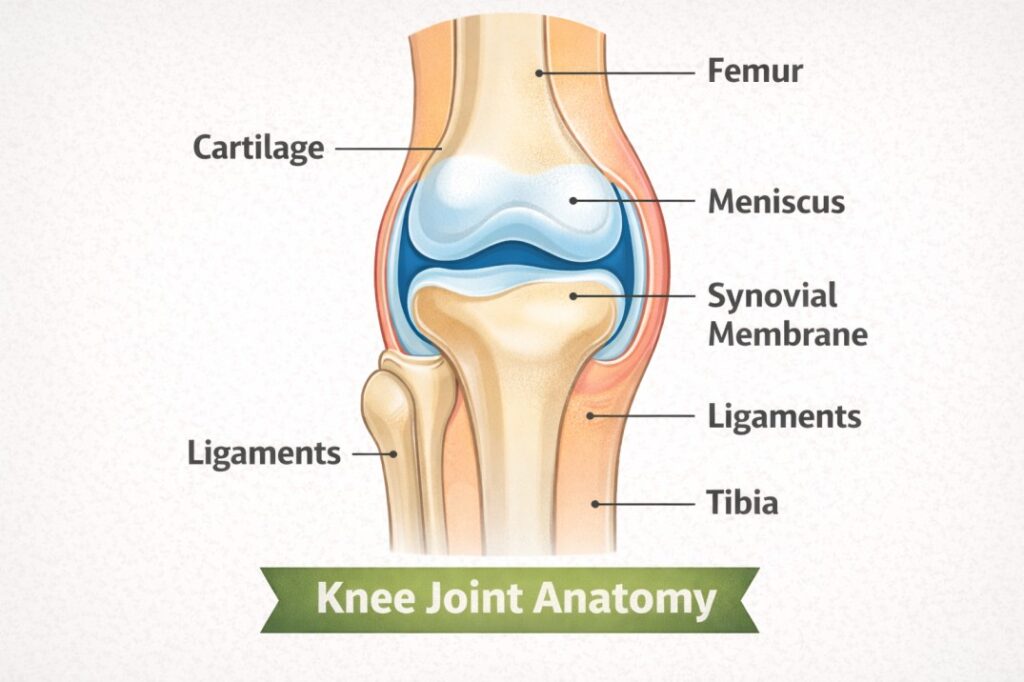
Can you rebuild knee cartilage without surgery? Patient selection matters
The success rate of non-surgical ways to rebuild knee cartilage depends on the following factors,
- Size and depth of cartilage damage
- Age and activity level
- Joint alignment
- Overall knee stability
This is why consulting a specialist is critical. Dr. Hesham Al-Khateeb carefully evaluates whether knee cartilage repair without surgery is realistic or whether knee cartilage replacement or minimally invasive surgery may offer better long-term outcomes.
When non-surgical approaches work best?
Knee cartilage repair without surgery tends to be most effective for:
- Early-stage cartilage damage
- Younger patients with good overall health
- Those willing to commit to comprehensive rehabilitation
- Cases where inflammation rather than structural damage is the primary issue
- Patients seeking to delay surgery while maintaining quality of life
When knee cartilage replacement becomes the better option?
Non-surgical care is not always enough. For people with advanced cartilage damage, knee cartilage replacement or surgical cartilage restoration is the ideal choice to restore joint function, prevent progression to arthritis, or delay knee replacement.
Timing matters! Early expert intervention may reduce the need for major surgery later. Surgery may be recommended when:
- Conservative treatments have been thoroughly tried without adequate relief
- Cartilage damage is severe or complete
- Daily activities are significantly impaired
- Joint instability or mechanical symptoms are present
- Quality of life is substantially diminished
Dr. Hesham Al-Khateeb specializes in both conservative management and advanced surgical techniques. His philosophy centers on exhausting appropriate non-surgical options first while ensuring patients have access to world-class surgical care when needed.
Why expert guidance is critical for knee cartilage repair?
Dr. Hesham Al-Khateeb’s Expertise
Dr. Hesham Al-Khateeb is a UK-trained orthopedic knee specialist in Dubai. His approach emphasizes personalized care, ensuring patients explore knee cartilage repair without surgery when appropriate, without delaying surgical solutions when needed.
Dr. Hesham brings unmatched expertise in treating:
- Cartilage injuries
- Sports-related knee injuries
- Joint preservation techniques
- Minimally invasive and non-surgical knee treatments
Benefits of Early Knee Cartilage Regeneration Care
Addressing cartilage damage in the early stage can improve your knee health. When treated at the right time, knee cartilage regeneration strategies can:
- Ease pain and reduce joint swelling
- Restore mobility, stability, and everyday confidence
- Slow the progression of cartilage deterioration
- Delay in some cases or avoid the need for knee cartilage replacement
By focusing on early intervention and cartilage preservation, knee cartilage repair without surgery becomes a realistic and achievable option for many patients under expert guidance.
Non-surgical knee cartilage repair: Guided by expertise
Choosing the right care early can make all the difference. With advanced diagnostics, regenerative treatments, and years of focused knee expertise, Dr. Hesham Al-Khateeb helps patients explore knee cartilage repair without surgery, while ensuring no time is lost if surgery becomes the best option.
Discover whether knee cartilage repair without surgery is right for you.
FAQs
Yes, in mild to moderate cases, non-surgical treatments reduce symptoms and improve function. Knee cartilage repair without surgery may not provide complete regeneration but ensures meaningful improvement.
Certain injections may support cartilage regeneration by improving joint lubrication and reducing inflammation, particularly when combined with a structured rehabilitation program. While they do not fully restore cartilage, they can help relieve symptoms and slow further cartilage damage.
Patients often ask can you rebuild cartilage naturally. While full regrowth is limited, lifestyle changes and guided care can support healing.
The results may vary, but many patients notice improvement within weeks to months, depending on treatment type and severity.
No. Knee cartilage replacement is typically reserved for advanced damage when non-surgical options are no longer effective.
Patients frequently ask can cartilage repair itself. While cartilage has limited healing ability, the right environment can support partial repair.
About the author

Dr. Hesham Al-Khateeb
FRCS (Trauma & Orthopaedics) – UK
UK Board-Certified
15+ Years Experience
DHA Licensed – Dubai
Knee & Hip Specialist
Dr. Hesham Al-Khateeb is a UK board-certified orthopaedic surgeon specialising in knee and hip conditions, including knee replacement, ACL reconstruction, meniscus repair, cartilage restoration, and hip replacement surgery. Trained and certified in the United Kingdom, he brings internationally recognised surgical expertise to patients across Dubai and the GCC.
Currently practising at Emirates Hospitals Dubai, Dr. Hesham is known for personalised, evidence-based care — combining the latest minimally invasive and arthroscopic techniques with a focus on restoring long-term joint function and quality of life.
Medical Disclaimer
This article is for informational purposes only and is not a substitute for professional medical advice, diagnosis, or treatment. Always seek the advice of a qualified health provider with any questions you may have regarding a medical condition.
Medically reviewed by Dr. Hesham Al-Khateeb