
Stress Fracture in Knee: Symptoms, Causes & Treatment Guide

Medically Reviewed by
Dr. Hesham Al-Khateeb
FRCS (Orthopaedics) · UK Board-Certified
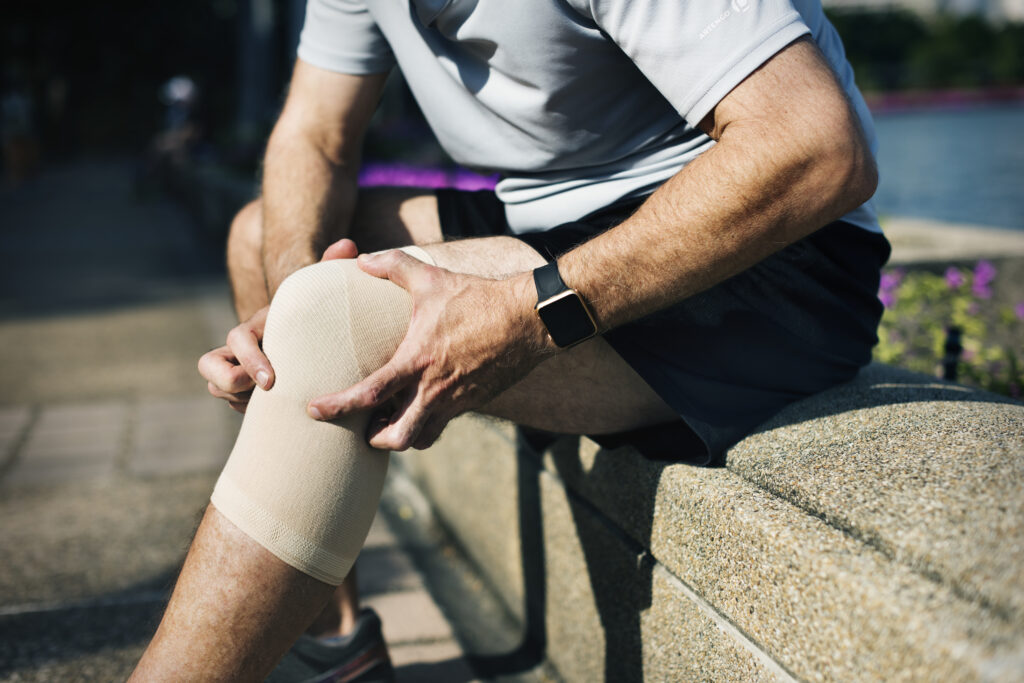
Knee pain is one of those symptoms many people tend to dismiss.
It often begins as a mild ache after a long walk, soreness after exercise, or discomfort that seems easy to explain away as overuse. Whether you are an athlete, a runner, an active adult, or simply someone who has been moving around more lately, it is easy to write it off as a temporary strain that will settle down with rest.
But sometimes, that nagging discomfort points to something more specific a stress fracture in knee.
Unlike a sudden fracture caused by a direct injury or fall, a knee stress fracture develops gradually. It occurs when repeated stress is placed on the bone faster than the body can repair itself. Left untreated, what starts as a tiny crack can worsen into a more serious injury, potentially requiring surgical intervention.
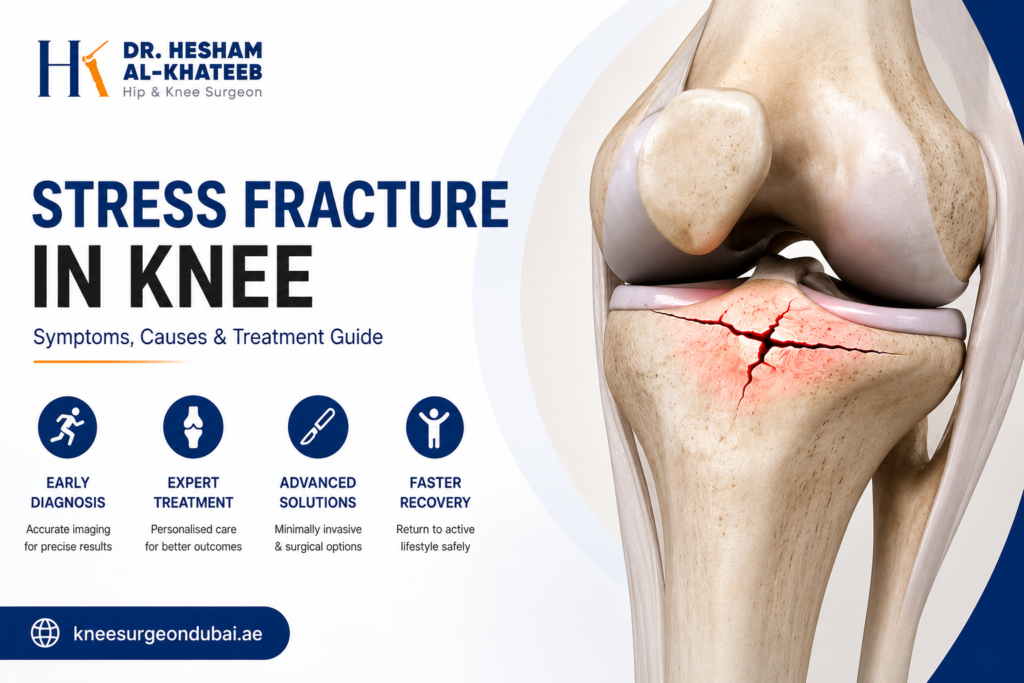
At Dr. Hesham’s practice, patients often seek evaluation after weeks or even months of unexplained knee pain. Many are surprised to learn that persistent pain without obvious trauma may indicate a stress fracture of the knee.
The good news is that with early diagnosis and the right treatment plan, recovery is highly achievable. In some cases, rest and protective care are sufficient. In others particularly when the fracture is advanced, unstable, or slow to heal surgical treatment offers the most effective long-term solution.
This guide explains everything patients need to know about stress fracture knee symptoms, causes, diagnosis, treatment options, recovery expectations, and when specialist surgical care may be needed.
Quick Summary: Key Facts About Stress Fracture in Knee
A stress fracture in the knee is a small crack or severe bone stress injury caused by repetitive force rather than sudden trauma.
Important facts to know:
Key Point | Details |
What it is | A tiny crack caused by repeated mechanical stress |
Common locations | Patella, tibial plateau, distal femur |
Early symptom | Localised pain that worsens with activity |
Risk factors | Running, sports, bone weakness, sudden activity increase |
Diagnosis | Clinical assessment and MRI imaging |
Mild treatment | Rest, bracing, activity modification |
Advanced treatment | Surgical stabilisation and fracture fixation |
Recovery time | Several weeks to several months depending on severity |
Studies suggest that stress fractures account for approximately 10% of all sports-related orthopaedic injuries, with lower limb stress injuries being among the most common.
What is a stress fracture in the knee?
It is a small crack or microscopic damage within the bone caused by repeated stress over time.
Bones are living tissues that constantly repair themselves. Every day, minor microscopic damage occurs and is naturally repaired through bone remodelling.
However, when repetitive stress exceeds the body’s ability to repair that damage, the bone begins to weaken. Over time, this leads to a stress fracture in the knee.
Unlike traumatic fractures, which happen suddenly, stress fractures develop gradually.
The knee can be affected in several areas:
Patella (Kneecap)
A patella stress fracture or stress fracture knee cap affects the kneecap itself. This is more common in jumping athletes and runners.
Tibial Plateau
This is the upper part of the shinbone that supports body weight.
Stress Reaction Knee
A stress reaction knee is often the early stage before a full fracture develops.
Recognising these injuries early can prevent progression.
Distal Femur
The lower part of the thigh bone near the knee joint.
Can you get a stress fracture in your knee?
Yes, although many people assume stress fractures only occur in the feet or shin.
While less common than stress fractures in the foot or tibia, stress fracture in the knee can occur when repetitive load overwhelms the bone’s ability to recover.
This is particularly seen in:
- Distance runners
- Basketball players
- Military recruits
- Dancers
- People rapidly increasing exercise intensity
- Individuals with weakened bone density
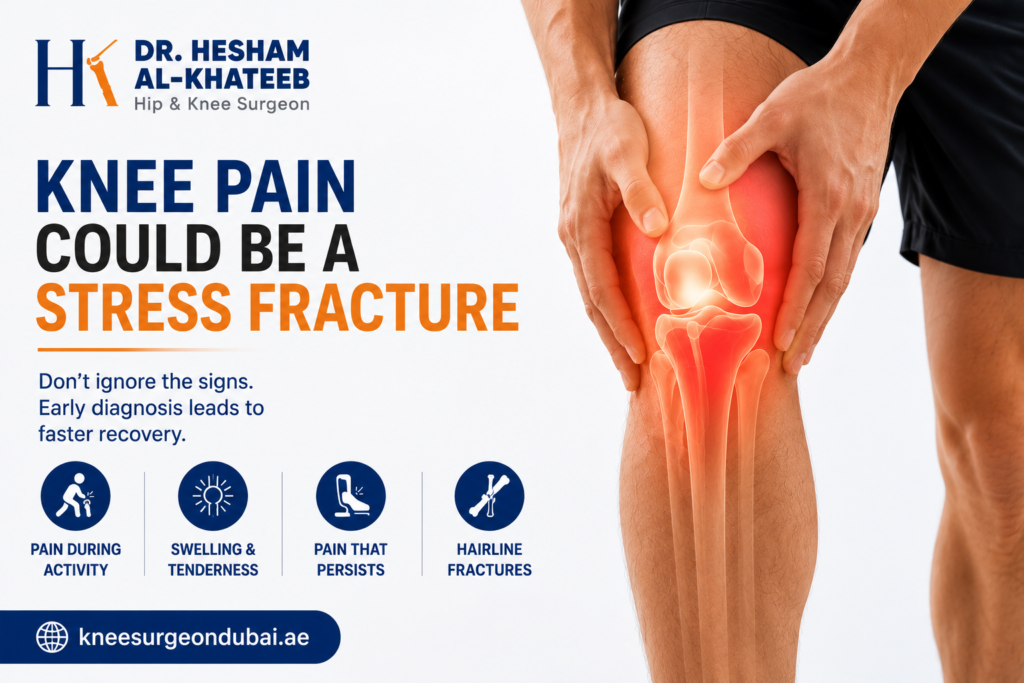
What causes a knee stress fracture?
Several factors contribute to the development of a stress fracture knee.
Repetitive High-Impact Activity
Repeated force through running, jumping, and intense training places ongoing pressure on the knee bones.
This is one of the leading causes of stress fracture in the knee.
Sudden Increase in Activity
A sharp increase in:
- Running distance
- Training intensity
- Frequency of exercise
- New high-impact routines
can overwhelm bone recovery mechanisms.
Poor Biomechanics
Abnormal movement patterns place uneven stress on the knee.
Examples include:
- Flat feet
- Poor running mechanics
- Muscle imbalances
- Joint misalignment
Reduced Bone Density
Weaker bones are more vulnerable to fracture.
Risk factors include:
- Osteoporosis
- Vitamin D deficiency
- Calcium deficiency
- Hormonal imbalance
Inadequate Recovery
Without sufficient rest between activity sessions, bone tissue cannot repair properly.
Symptoms of a stress fracture knee
Recognising stress fracture knee symptoms early is essential.
Localised Knee Pain
Pain is usually focused in one area rather than general knee discomfort.
Patients often describe it as:
- Sharp
- Deep aching
- Tender
- Persistent
This is one of the earliest stress fracture in knee symptoms.
Pain That Worsens with Activity
One hallmark of a stress fracture of the knee symptoms is pain that increases during:
- Walking
- Running
- Climbing stairs
- Squatting
- Exercise
Relief with Rest
Early on, pain often improves with rest.
As the fracture worsens, discomfort may persist even when inactive.
Swelling
Mild swelling around the fracture site is common.
Tenderness to Touch
Direct pressure over the affected area may trigger discomfort.
Difficulty Bearing Weight
Advanced fractured knee symptoms may include painful weight-bearing.
What does a fractured knee feel like?
A fractured knee often feels different from regular soreness. A stress fracture in knee usually causes a deep, localized ache that worsens with walking, running, or climbing stairs.
It often presents as:
- A pinpoint ache
- Pain that becomes sharper during movement
- Deep discomfort beneath the kneecap
- Increasing pain after repetitive use
This differs from muscular soreness, which tends to feel diffuse and improves more quickly.
Can you break your knee and not know it?
Surprisingly, yes because stress fractures develop gradually, many patients continue daily activity without realising they have a bone injury.
This delay in diagnosis is one reason small fractures sometimes progress into more serious injuries.
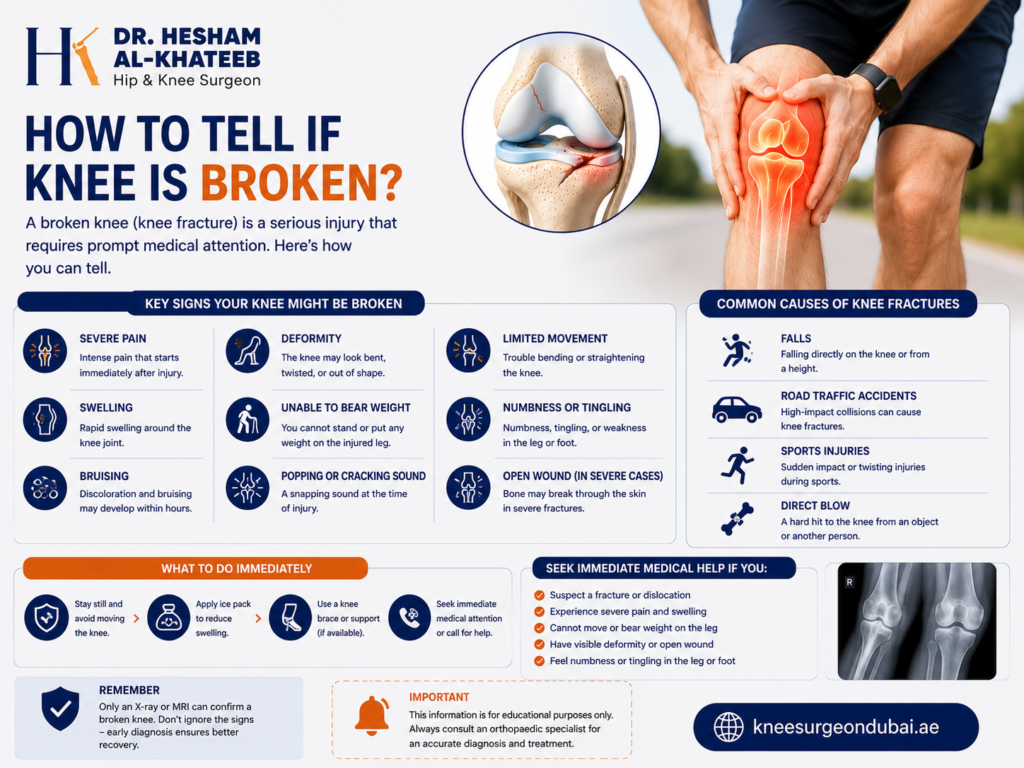
How to tell if knee is broken?
A broken or fractured knee usually causes persistent localised pain, swelling, tenderness, and difficulty bearing weight. If the pain worsens with movement and does not improve with rest, medical evaluation is essential.
Symptom | Possible meaning |
Persistent localised pain | Stress fracture or bone injury |
Pain worsening with activity | Mechanical bone stress |
Swelling without trauma | Stress-related inflammation |
How Dr. Hesham diagnoses stress fracture in knee?
Accurate diagnosis is essential because symptoms can mimic:
- Tendonitis
- Ligament strain
- Meniscus injury
- Patellofemoral pain syndrome
Dr. Hesham uses a comprehensive evaluation process.
Clinical Assessment
This includes:
- Symptom history
- Activity review
- Physical examination
- Tenderness mapping
- Weight-bearing assessment
Imaging Tests
X-Ray
Useful but may miss early hairline fracture knee injuries.
MRI
MRI is considered the gold standard.
It detects:
- Early stress reactions
- Bone marrow swelling
- Small fractures invisible on X-ray
CT Scan
Provides detailed structural imaging for surgical planning.
Types of knee stress fractures
Hairline Fracture in Knee
A hairline fracture in knee is a tiny crack often seen in early-stage injury.
Patellar Stress Fracture
A patellar stress fracture affects the kneecap.
This often causes pain at the front of the knee.
Stress Fracture Below Knee
This usually involves the upper tibia.
Treatment for stress fracture in knee
Treatment depends on:
- Fracture location
- Severity
- Bone stability
- Healing progress
- Patient activity demands
Because Dr. Hesham is a surgeon, treatment planning focuses on identifying when surgery offers better long-term outcomes.
Conservative treatment options
For mild injuries, treatment for stress fracture in knee may begin conservatively.
Activity Modification
Reducing repetitive stress allows healing.
Bracing or Immobilisation
Supports healing by limiting movement.
Pain Control
Anti-inflammatory medication may help relieve symptoms.
Physiotherapy
Once healing begins, rehabilitation restores strength.
However, conservative treatment is not always enough.
Advanced surgical treatment for knee stress fracture
When a knee stress fracture is unstable, delayed in healing, or at risk of worsening, surgical treatment becomes the most effective solution, This is where Dr. Hesham’s expertise is particularly important.
Minimally Invasive Fracture Stabilisation
This technique uses small incisions to stabilise the fracture internally.
Benefits include:
- Less tissue trauma
- Reduced post-operative pain
- Faster recovery
- Lower infection risk
Internal Fixation Surgery
For more advanced fractures, Dr. Hesham may use:
Surgical Screws
To compress and stabilise the fracture
Plates
To reinforce structural support
Precision Alignment Techniques
To restore normal biomechanics
This approach allows reliable healing.
Why Surgery May Be the Better Long-Term Option?
For some patients, surgery offers clear advantages.
Surgical Benefit | Why It Matters |
Immediate stability | Prevents worsening |
Better alignment | Protects joint mechanics |
Faster structured recovery | Earlier rehabilitation |
Lower recurrence risk | Stronger healing |
Reduced chronic pain risk | Better long-term outcomes |
What is recovery like after surgical treatment?
Recovery depends on fracture severity and procedure type.
Recovery Timeline
Recovery Stage | Typical Timeline |
Initial protection | 2–6 weeks |
Controlled rehabilitation | 6–12 weeks |
Strength rebuilding | 3–4 months |
Return to sport | 4–6 months |
Post-operative care: What patients should expect
After surgery, patients receive a personalised recovery plan.
This may include:
Weight-Bearing Restrictions
Temporary protection of healing bone
Physiotherapy
To restore strength and mobility
Follow-Up Imaging
To confirm healing progression
Gradual Activity Return
A carefully monitored increase in movement
When should you see Dr. Hesham?
Do not ignore these signs, seek specialist evaluation if you experience:
- Persistent knee pain lasting more than 7 to 10 days
- Pain that worsens the more active you are
- Localised tenderness around the knee
- Unexplained swelling with no obvious cause
- Trouble bearing weight comfortably
Early intervention improves outcomes significantly.
Practical tips to protect your knees
Preventing recurrence matters.
Patients should:
- Increase activity gradually
- Wear proper footwear
- Maintain good nutrition
- Address vitamin D deficiency
- Prioritise recovery time
- Correct biomechanical issues
Early treatment leads to better recovery
A stress fracture in knee is more than just routine knee pain. It is a genuine bone injury that requires timely diagnosis and appropriate treatment. Recognising stress fracture knee symptoms early can prevent progression, reduce complications, and improve healing outcomes.
While some cases respond well to conservative care, more advanced injuries often require surgical management for reliable recovery.
With expert assessment, advanced imaging, and specialist surgical treatment when needed, patients can recover safely and return to daily life with confidence.
If you are experiencing persistent knee pain or suspect a stress fracture in the knee, consultation with Dr. Hesham can provide clarity, accurate diagnosis, and a personalised treatment plan focused on lasting recovery.
FAQs
Yes, mild stress fractures can often heal with rest, activity modification, and proper support. However, an unstable fracture or one that is slow to heal may ultimately require surgical treatment to get the patient to a complete recovery.
In many cases, a stress fracture may not cause obvious visible changes in the early stages. Some patients may notice mild swelling, slight puffiness, or tenderness around one specific area of the knee.
you may experience difficulty bending, straightening, or putting weight on your knee.
A hairline fracture in knee typically takes around 6 to 12 weeks to heal, depending on its severity and location. Getting back on your feet too soon or waiting too long to seek a diagnosis can both have a real impact on how long recovery takes.
Excessive walking puts repeated stress on the injured bone and can set back the healing process. That is why Dr. Hesham may advise limiting weight-bearing activity until the bone has been confirmed to be healing properly.
need medication, physical therapy, or surgery.
A fractured knee does not always show dramatic external signs, especially with stress fractures. Some patients may experience mild swelling, tenderness, or discomfort without obvious bruising or deformity.
Running, jumping, and intense workouts are all high-impact activities that need to be put on hold during healing. That said, low-impact alternatives may be possible depending on your stage of recovery and what your doctor recommends.
Minimising discomfort is at the heart of modern surgical techniques, with minimally invasive approaches and effective pain management playing a key role in how procedures are performed today. Most patients experience manageable post-operative soreness that improves steadily during recovery.
Persistent sharp pain, swelling, tenderness, and difficulty putting weight on the knee can be signs of a fracture. If the pain worsens with movement or does not improve with rest, medical imaging is needed to confirm the injury.
About the author

Dr. Hesham Al-Khateeb
FRCS (Trauma & Orthopaedics) – UK
UK Board-Certified
15+ Years Experience
DHA Licensed – Dubai
Knee & Hip Specialist
Dr. Hesham Al-Khateeb is a UK board-certified orthopaedic surgeon specialising in knee and hip conditions, including knee replacement, ACL reconstruction, meniscus repair, cartilage restoration, and hip replacement surgery. Trained and certified in the United Kingdom, he brings internationally recognised surgical expertise to patients across Dubai and the GCC.
Currently practising at Emirates Hospitals Dubai, Dr. Hesham is known for personalised, evidence-based care — combining the latest minimally invasive and arthroscopic techniques with a focus on restoring long-term joint function and quality of life.
Medical Disclaimer
his article is for informational purposes only and is not a substitute for professional medical advice, diagnosis, or treatment. Always seek the advice of a qualified health provider with any questions you may have regarding a medical condition.
Medically reviewed by Dr. Hesham Al-Khateeb