
What Are the Long-Term Effects of an ACL Tear Without Surgery?

Medically Reviewed by
Dr. Hesham Al-Khateeb
FRCS (Orthopaedics) · UK Board-Certified
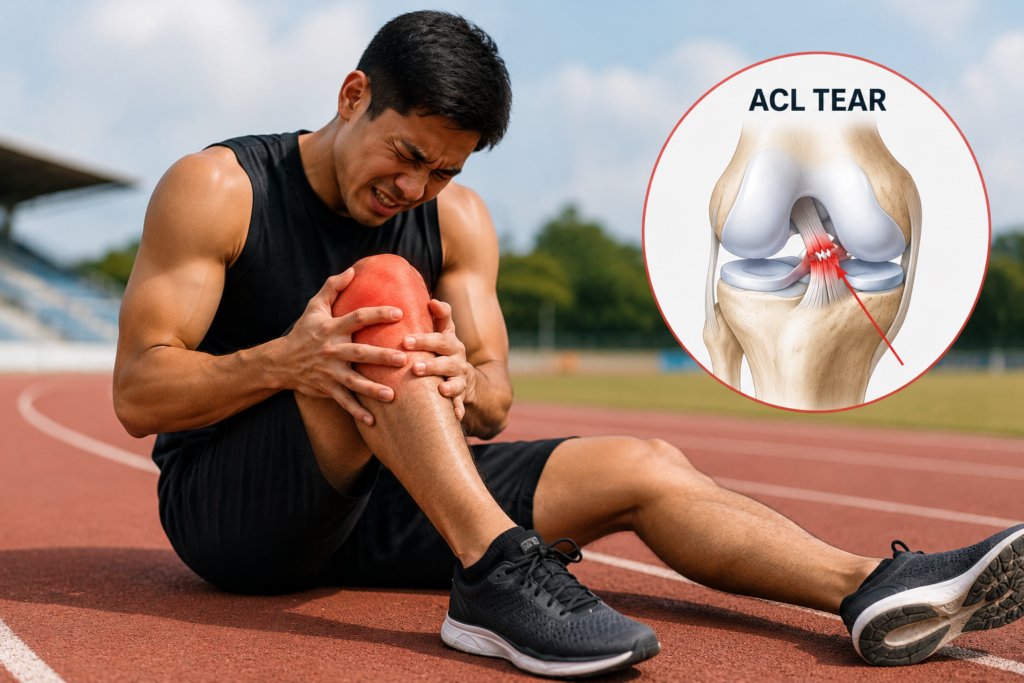
An ACL tear can seriously affect how the knee works. It often causes reduced mobility and knee instability, especially among athletes and other active people. Some patients think about non-surgical options at first, but it’s important to know the long-term effects of ACL tear without surgery before deciding on treatment.
The ACL helps keep the knee stable. If it tears, the knee can become unstable, leading to ongoing symptoms and, if left untreated, further joint damage. Dr. Hesham Al-Khateeb considers each patient’s symptoms, activity level, and personal goals to suggest the most suitable treatment.
What is an ACL injury?
The ACL is one of the primary ligaments that stabilize the knee. Running between the femur and tibia, it helps support proper knee function and prevents excessive forward movement and rotation of the joint during physical activity.
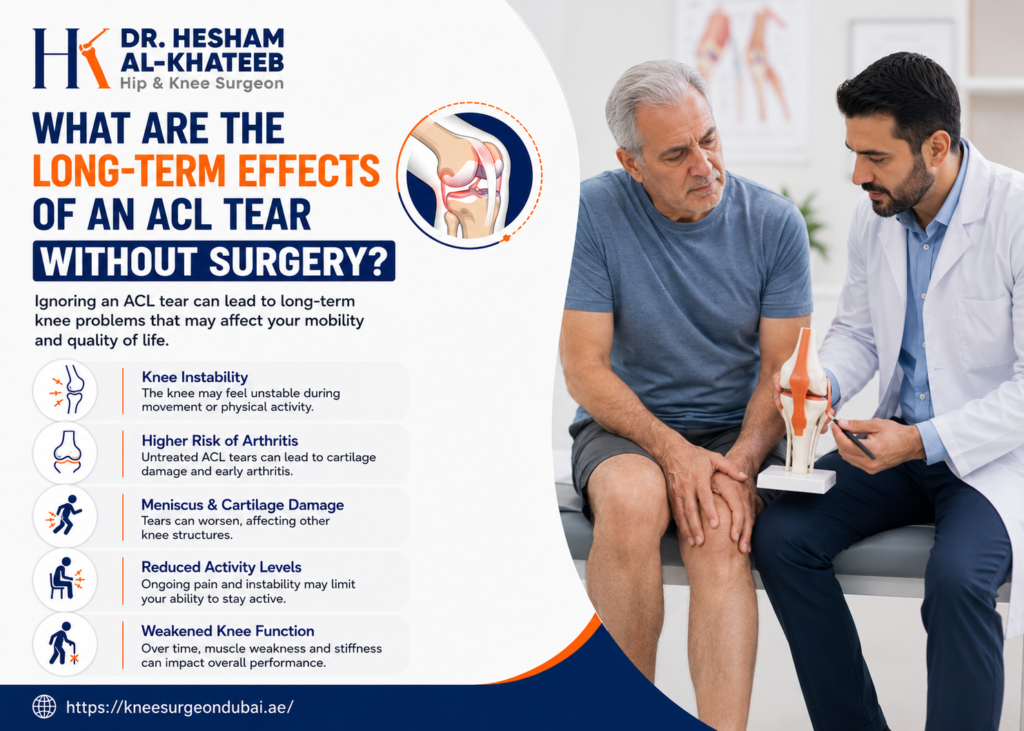
An ACL injury typically occurs during sudden stops, rapid changes in direction, awkward landings after a jump, or direct impact to the knee. Common ACL tear symptoms over time may include pain, swelling, instability, and difficulty returning to normal activities. If left untreated, patients may experience some of the long-term effects of an ACL tear without surgery, including ongoing knee instability and an increased risk of further joint damage.
Long-term knee pain after ACL injury
Not all ACL injuries cause immediate long-term pain, but many patients develop long-term knee pain after ACL injury due to secondary damage.
This pain may result from:
- Meniscus injuries
- Cartilage wear
- Joint instability
- Early osteoarthritis
Over time, this can make it harder to move, exercise, and enjoy daily life.
Is it safe to live with a torn ACL?
A common question is: is it safe to live with a torn ACL? The answer depends on a few things, such as:
- Age
- Activity level
- Occupational demands
- Degree of instability
- Presence of associated injuries
People who aren’t very active might manage without surgery if they follow a rehab plan, but active people have a higher risk of more knee damage.
ACL rehabilitation without surgery
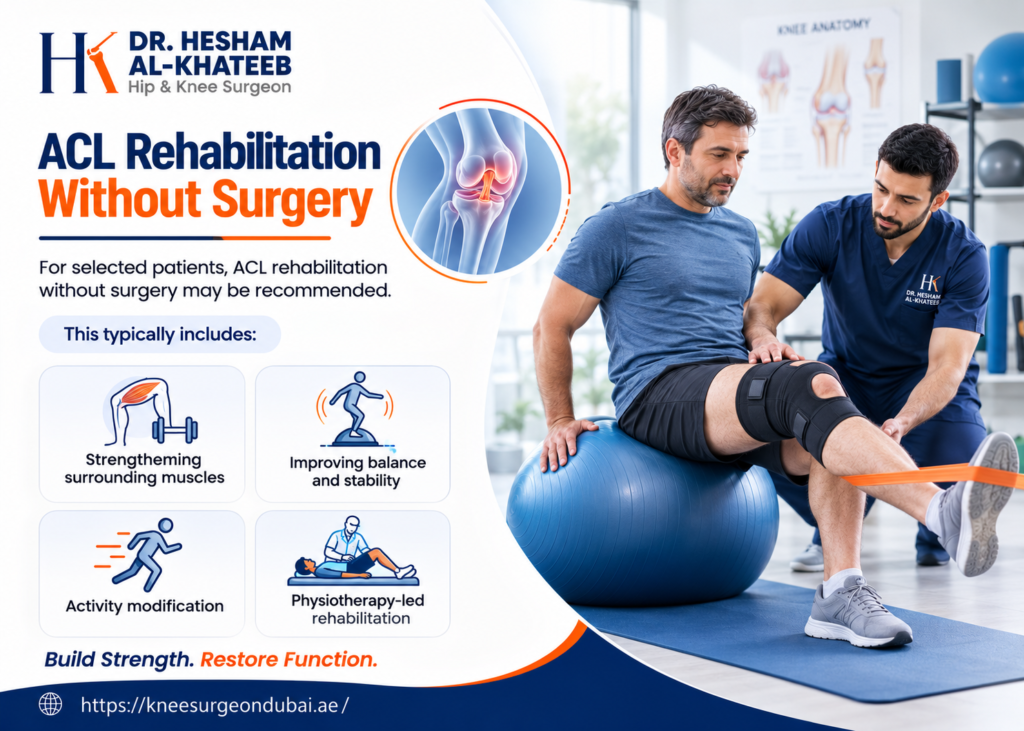
For selected patients, ACL rehabilitation without surgery may be recommended.
This typically includes:
- Strengthening surrounding muscles
- Improving balance and stability
- Activity modification
- Physiotherapy-led rehabilitation
However, rehab helps your body adapt to the injury rather than repairing the torn ligament.
When should you seek medical help?
You should consult a specialist if you experience:
- Repeated knee instability
- Difficulty returning to activity
- Persistent swelling or pain
- Reduced confidence in movement
Getting checked early can help prevent more joint damage and help you find the best treatment plan.
Why choose Dr. Hesham Al-Khateeb
Dr. Hesham Al-Khateeb is a knee surgeon in Dubai with years of experience treating ACL injuries and other complex knee problems. He is dedicated to helping patients regain stability, move comfortably, and maintain healthy joints with care tailored to each person. He has:
- Extensive experience in treating ACL injuries, sports-related knee conditions, and ligament reconstruction.
- Offers both non-surgical treatment options and advanced arthroscopic ACL surgery, tailored to each patient’s needs.
- Creates personalized treatment plans based on your lifestyle, activity level, and long-term goals.
- Focuses on protecting long-term knee health by addressing instability and reducing the risk of future joint damage.
- He uses minimally invasive techniques when possible to help you recover more smoothly and get back to your usual activities sooner.
- Provides structured rehabilitation guidance to help patients safely regain strength, mobility, and confidence.
- Delivers patient-centered care with thorough evaluations, clear communication, and evidence-based treatment recommendations.
ACL Tear Treatment
After examination, tests, and imaging, Dr. Hesham Al-Khateeb in Dubai determines the most suitable treatment plan based on your condition and goals.
Non-surgical ACL treatment
- Physiotherapy and rehabilitation help restore knee strength and stability.
- A hinged knee brace may be recommended for added support.
- Non-surgical management can improve function but may still carry a risk of further knee injury due to instability.
Surgical ACL treatment
Recommended when conservative treatment does not restore knee stability. Common procedures include:
- Arthroscopic ACL reconstruction: replaces the torn ligament with a graft (autograft or donor tissue) to restore stability.
- ACL repair (selected cases): preserves and reattaches the existing ligament in suitable partial tear cases.
Surgical choice depends on tear type, knee condition, and activity level.
Don't ignore the signs of an untreated ACL tear- Get expert ACL care
The long-term effects of ACL tear without surgery can range from mild instability to significant joint damage, depending on activity level and injury severity. While some patients may manage with ACL rehabilitation without surgery, others may develop complications such as meniscus damage after ACL tear, chronic instability, or early arthritis.
Understanding what happens if you leave a torn ACL untreated is essential in making an informed decision about your knee health.
To get advice that fits your needs, seeing a orthopedic sugeon like Dr. Hesham Al-Khateeb can help you find the safest and most effective way to recover and stay active.
FAQs
No, in most cases a torn ACL will not heal completely or return to normal stability without surgery.
Yes, if an ACL injury is not treated, the knee often feels unstable and may give way during movement.
Yes, ongoing instability and damage over time can raise the risk of developing knee osteoarthritis.
Leaving a torn ACL untreated can cause the knee to become unstable, lead to more injuries, damage the meniscus, and result in long-term joint problems.
Rehabilitation without surgery can help some people improve knee function and stability, but it will not heal the torn ligament.
Yes, a torn ACL can worsen over time if left untreated. Ongoing instability may lead to meniscus damage after ACL tear, cartilage wear, chronic pain, and even early arthritis.
About the author

Dr. Hesham Al-Khateeb
FRCS (Trauma & Orthopaedics) – UK
UK Board-Certified
15+ Years Experience
DHA Licensed – Dubai
Knee & Hip Specialist
Dr. Hesham Al-Khateeb is a UK board-certified orthopaedic surgeon specialising in knee and hip conditions, including knee replacement, ACL reconstruction, meniscus repair, cartilage restoration, and hip replacement surgery. Trained and certified in the United Kingdom, he brings internationally recognised surgical expertise to patients across Dubai and the GCC.
Currently practising at Emirates Hospitals Dubai, Dr. Hesham is known for personalised, evidence-based care — combining the latest minimally invasive and arthroscopic techniques with a focus on restoring long-term joint function and quality of life.
Medical Disclaimer
his article is for informational purposes only and is not a substitute for professional medical advice, diagnosis, or treatment. Always seek the advice of a qualified health provider with any questions you may have regarding a medical condition.
Medically reviewed by Dr. Hesham Al-Khateeb