
Pain below Kneecap above Shin

Medically Reviewed by
Dr. Hesham Al-Khateeb
FRCS (Orthopaedics) · UK Board-Certified
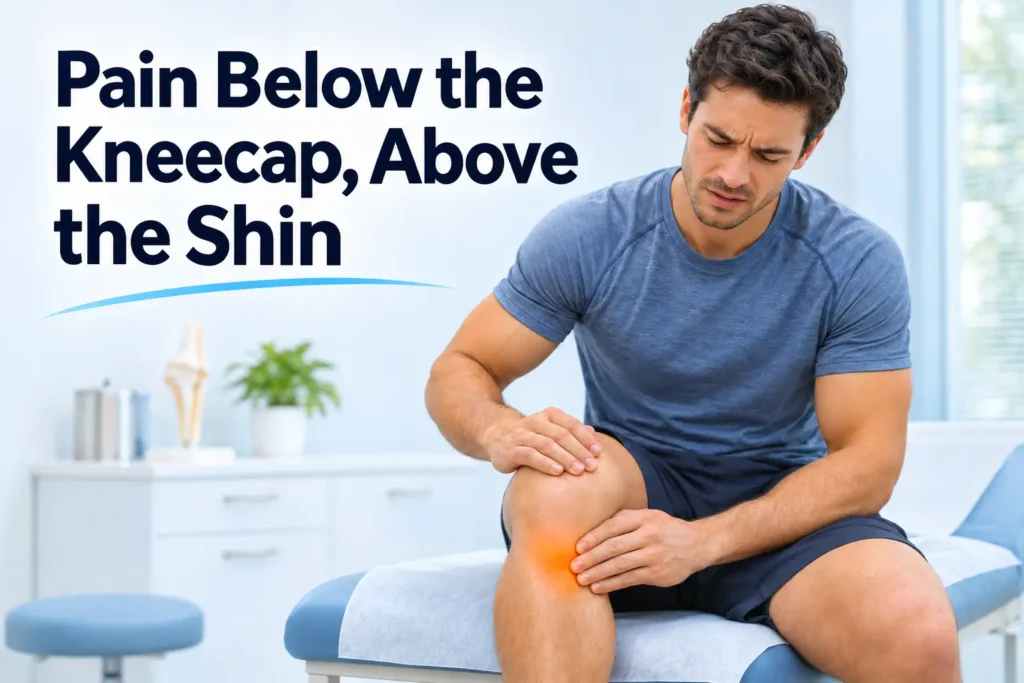
Pain below Kneecap above Shin: Causes, symptoms, and treatment
Do you have a sudden, deep pain just below the kneecap as you run, step up or rise from a seated position? When the pain occurs below kneecap above shin, it may start slowly, after a long walk or a strenuous physical activity. Initially, it may disappear with rest. If the pain persists, however, there might be repeated strain to the patellar tendon.
Dr. Hesham Al-Khateeb is a UK board-certified orthopedic surgeon in Dubai who has been treating the patients for 15 years for knee conditions, sports injuries and joint surgery. Throughout his practice, he has sought to determine the origin of pain and to choose treatment based upon the individual needs of each patient.
Here, we discuss why pain below kneecap above shin develops, the symptoms worth watching, and the available treatment options.
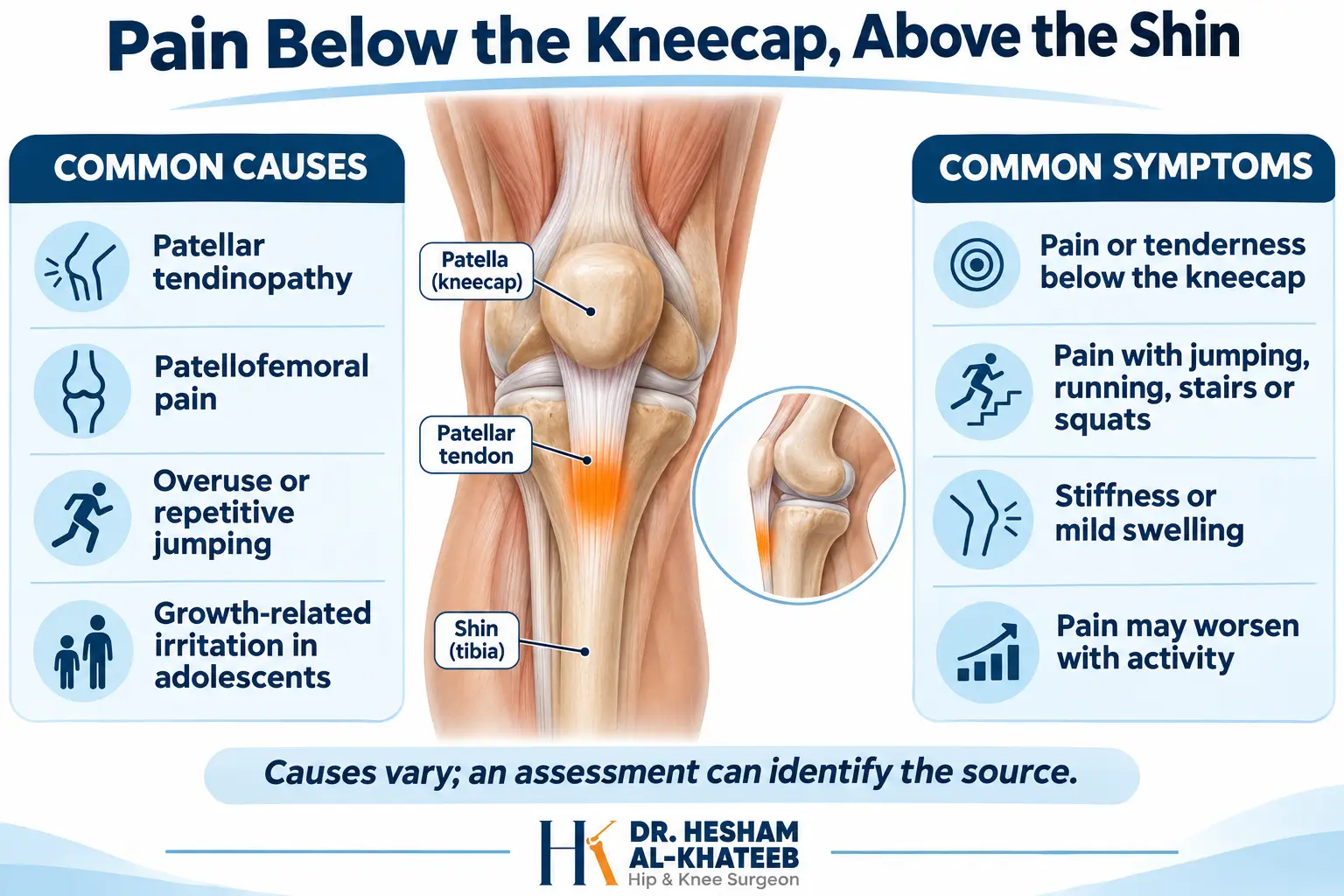
Why does pain below Kneecap above Shin occur?
The patellar tendon connects the kneecap to the upper shinbone. Along with the quadriceps muscles, it helps straighten your knee whenever you walk, climb stairs, or jump.
When this tendon is repeatedly overloaded, patellar tendon pain may develop. Still, pain below knee can have several explanations.
- Patellar tendinitis: Repeated strain affects the tendon beneath the kneecap.
- Patellar ligament injury: Sudden force can cause partial or complete tearing.
- Infrapatellar bursitis: A small cushioning sac becomes inflamed.
- Osgood-Schlatter disease: Growing adolescents may experience knee and shin pain.
- Patellofemoral pain: Discomfort develops around or behind the kneecap.
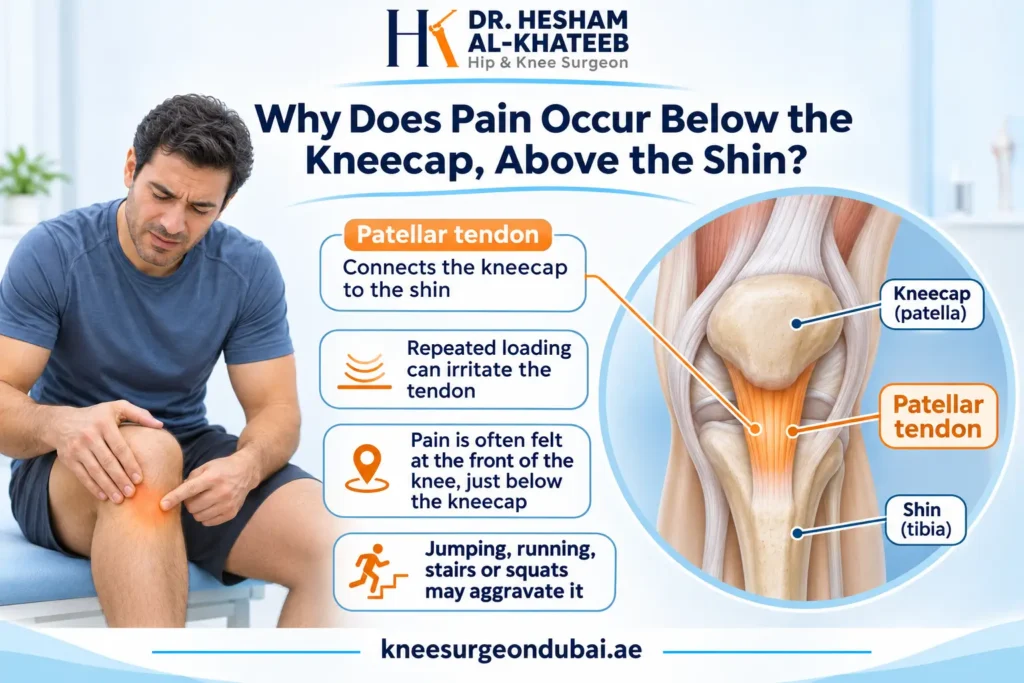
What is Patellar Tendonitis?
Patellar tendonitis, sometimes called patella tendinitis, patellar tendinitis, or jumper’s knee, is associated with repeated stress on the tendon.
Basketball players and runners frequently experience this problem, although it can affect people who do not participate in sports.
The terms knee tendonitis and tendonitis knee are commonly used. In longstanding cases, the tendon may develop structural changes rather than ongoing inflammation.
What causes Patellar Tendonitis?
Several factors can place additional strain on the tendon:
- Frequent jumping, sprinting, or running
- Suddenly increasing workout intensity
- Tight quadriceps or hamstrings
- Uneven strength across leg muscles
- Poor jumping or landing technique
- Inadequate recovery between workouts
What are the Patellar Tendonitis symptoms?
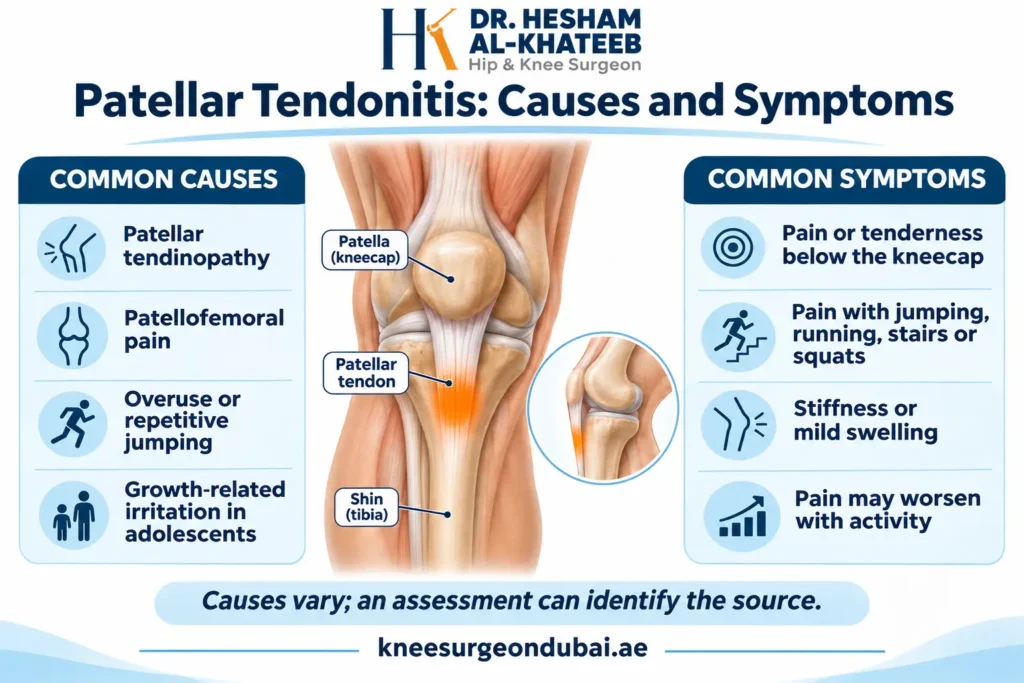
What does patellar tendonitis feel like?
The patellar tendinitis symptoms are usually concentrated between the lower edge of the kneecap and the shinbone.
Signs and symptoms of patellar tendinitis include:
- Pain right below kneecap when running or jumping
- Swelling, tenderness when touching the tendon
- A knee condition characterized by pain in front of the kneecap, below the knee
- Inability to stand up straight from squats or stairs
- Rigidity following prolonged sitting activities
Early knee tendonitis symptoms may occur only during strenuous activity. Later, everyday movements can become uncomfortable.
Reasons for Patellar Tendon Pain based on Location
Pain location | Possible explanation |
Bottom of kneecap pain | Patellar tendon irritation |
Pain right under kneecap | Tendinopathy or patellofemoral pain |
Pain at bottom of kneecap | Tendon attachment irritation |
Pain just below kneecap | Patellar tendinopathy |
Knee pain below kneecap with swelling | Bursitis or tendon injury |
Pain below the knee near the shin | Tendon insertion problem or Osgood-Schlatter disease |
Pain location provides clues, but examination is necessary for diagnosis.
How is Patellar Tendon Pain treated?
Most patients begin with nonsurgical tendonitis treatment. The aim is to reduce painful loading while gradually rebuilding tendon strength.
Nonsurgical Treatment options
- Activity modifications: Decrease activities that worsen pain for a time.
- Cold therapy: Ice for 15-20 minutes after activity.
- Physical therapy: Slowly build up quadriceps and other muscles.
- Flexibility exercises: Address muscle tightness where appropriate.
- Medication: Use suitable pain relief under medical guidance.
When might surgery be needed?
Surgery is rarely necessary for patellar tendinopathy. It may be considered for persistent cases of pain in front of knee below kneecap that have not improved with appropriate rehabilitation or for significant tendon tears.
Why consult Dr. Hesham Al-Khateeb?
Dr. Hesham has an extensive international orthopedic training and experience in treating complex knee conditions.
- 20+ years of orthopedic experience
- UK board certification in trauma and orthopedics
- International training in the UK, Canada, Germany, and the USA
- Sports medicine expertise covering knee injuries and rehabilitation
- Advanced knee procedures, including arthroscopy and ligament reconstruction
- Individualized treatment plans focused on restoring movement and function
Arrange an assessment if the discomfort continues, worsens, or begins affecting daily activities.
If pain is sudden, severe after an injury, you cannot straighten the knee, or you are having trouble putting weight on it, you need immediate medical help.
Chronic pain below the kneecap? Find out why
If the pain comes back often after walking, exercise or normal activity, then it should be addressed. Early detection of its cause can help prevent further strain and direct the rehabilitation of the injured party.
Meet Dr. Hesham Al Khateeb in Dubai for a comprehensive knee evaluation and a treatment plan that meets your activity level and condition.
FAQs
Why does my Patellar Tendon hurt?
Overloading the tendon can result in tenderness and pain, which can happen when the tendon is repeatedly stressed, when training changes suddenly, and when there are muscle imbalances.
What are the symptoms of patellar tendonitis?
The primary signs and symptoms of patellar tendonitis are localized tenderness, pain with exercise and discomfort with stair climbing.
Is there a way to heal patellar tendon pain without surgery?
Yes. Most cases of patella tendon pain respond to activity modification and progressive strengthening exercises.
Is pain below kneecap always related to tendonitis?
No. Pain below kneecap can also result from bursitis, patellofemoral problems, or tendon injuries.
Can patellar ligament pain affect walking?
Yes. Patellar ligament pain may make walking or climbing stairs uncomfortable, particularly when the tendon is significantly affected.
Which of the following is responsible for pain just below the kneecap?
Patellar tendinopathy is a common cause of pain just below kneecap, but other causes may result in the same symptoms.
What can cause knee tendonitis to get worse?
Ongoing painful activities, if continued without appropriate recovery, can aggravate symptoms of the tendon and hamper movement.
What is the healing time for patellar tendinitis?
Recovery varies. Some cases may have mild symptoms and respond in a few weeks, whereas others may have to undergo months of rehabilitation.
Is it possible for patellar tendonitis to cause pain below kneecap?
Yes. Pain below kneecap is a characteristic complaint, especially during jumping, running, or squatting.
How can I prevent recurring knee pain?
Strengthen your leg muscles, increase exercise gradually, improve movement technique, and allow sufficient recovery.
Stay Updated with Dr. Hesham Al-Khateeb
Add Dr. Hesham Al-Khateeb as a preferred source on Google to see the latest hip and knee health updates, treatment information, and expert orthopedic advice when you search.
About the author

Dr. Hesham Al-Khateeb
FRCS (Trauma & Orthopaedics) – UK
UK Board-Certified
15+ Years Experience
DHA Licensed – Dubai
Knee & Hip Specialist
Dr. Hesham Al-Khateeb is a UK board-certified orthopaedic surgeon specialising in knee and hip conditions, including knee replacement, ACL reconstruction, meniscus repair, cartilage restoration, and hip replacement surgery. Trained and certified in the United Kingdom, he brings internationally recognised surgical expertise to patients across Dubai and the GCC.
Currently practising at Emirates Hospitals Dubai, Dr. Hesham is known for personalised, evidence-based care — combining the latest minimally invasive and arthroscopic techniques with a focus on restoring long-term joint function and quality of life.
Medical Disclaimer
his article is for informational purposes only and is not a substitute for professional medical advice, diagnosis, or treatment. Always seek the advice of a qualified health provider with any questions you may have regarding a medical condition.
Medically reviewed by Dr. Hesham Al-Khateeb