
Fuel Strong Knees: Best Supplements for ACL Recovery

Medically Reviewed by
Dr. Hesham Al-Khateeb
FRCS (Orthopaedics) · UK Board-Certified

If you have an ACL injury or are recovering from ACL reconstruction, you may wonder what supplements are best for ACL recovery. Nutrition cannot replace surgery, physiotherapy, or a structured rehabilitation programme, but getting enough protein, vitamins, minerals, and other nutrients can support the body’s normal tissue repair and muscle recovery.
So, what are the best supplements for ACL recovery? The appropriate method will vary according to the type of diet you follow, your general state of health, and whether or not you have any nutritional deficiencies. Some ACL recovery supplements have been studied in people recovering from ACL reconstruction, but there is no single supplement proven to speed up recovery for everyone. Adequate protein intake and correcting vitamin D insufficiency may be particularly relevant during rehabilitation.
Dr. Hesham Al-Khateeb provides assessment and treatment for ACL injuries and other knee conditions, helping patients understand their injury and develop an appropriate treatment and rehabilitation plan.
Why nutrition matters during ACL recovery?
After ACL reconstruction, your body needs enough energy and protein to support tissue repair and maintain muscle. Reduced activity during the early stages of recovery can also contribute to muscle loss, particularly in the quadriceps.
This makes adequate nutrition an important part of rehabilitation. Current evidence suggests that protein and sufficient overall energy intake should come before targeted supplements. Rehabilitation exercises remain the mainstay of recovery after ACL reconstruction.
So, rather than looking for one supplement that can heal the ligament, focus first on eating enough, getting adequate protein, and following your rehabilitation programme.
What supplements help heal a torn ACL?
The ACL is a strong band of connective tissue that helps stabilise the knee. After an ACL injury or reconstruction, the body needs adequate energy and nutrients to support tissue repair while rehabilitation works to restore strength, movement, and knee function.
Potentially useful supplements and nutrients include:
- Protein and amino acids
- Vitamin D
- Vitamin C
- Collagen
- Omega-3 fatty acids
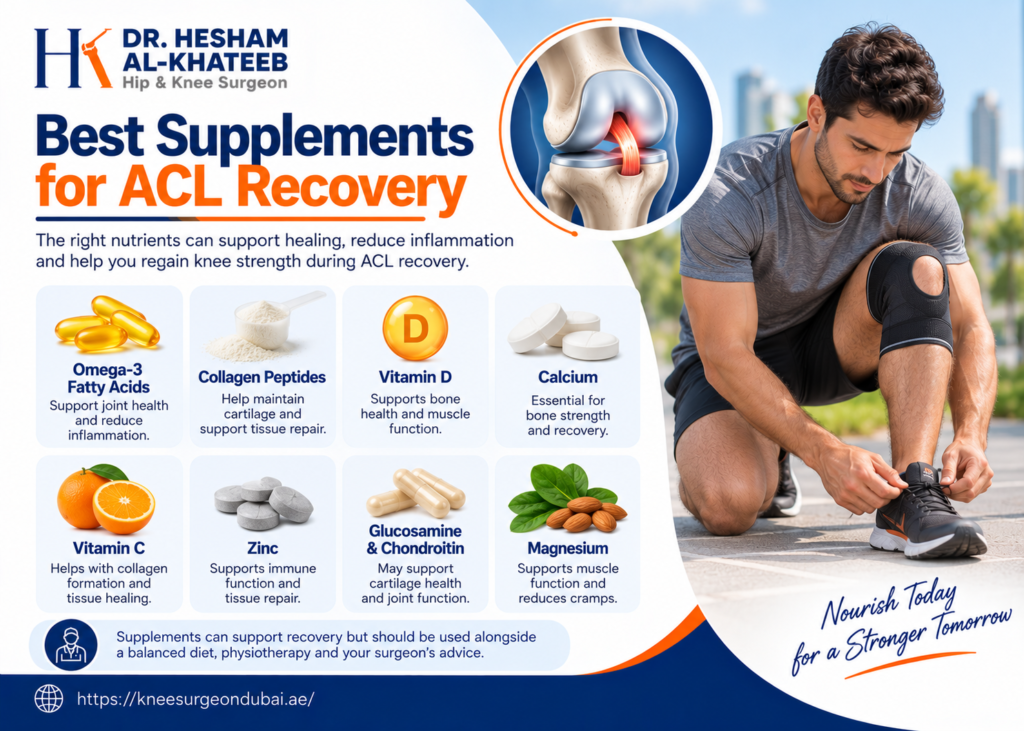
These ACL injury supplements may have a role in supporting overall nutrition during recovery, but their usefulness depends on your individual nutritional needs. However, supplements should complement a balanced diet rather than replace it. Research into supplements for ACL tear recovery is still evolving, and there is not enough evidence to recommend one standard supplement programme for every patient.
Best supplements for ACL recovery
Protein
The amino acids that your body needs in order to keep its muscles and to help with the repair of tissue are supplied by protein. Because reduced activity after ACL surgery can lead to muscle loss, getting enough protein is particularly important during rehabilitation.
Eggs, fish, poultry, dairy products, beans, lentils, and tofu are all good sources. If you have difficulty getting enough protein from your diet, a protein supplement may be of use. Although people’s needs differ, research indicates that taking protein supplements might help to preserve muscle and aid functional recovery following ACL reconstruction.
Vitamin D
Vitamin D supports healthy bones and muscles, both of which are important during ACL rehabilitation. Low vitamin D levels may also affect muscle recovery after ACL reconstruction. If you have a confirmed deficiency or are at increased risk, your doctor may recommend a supplement. A blood test can help determine whether supplementation is needed and the appropriate dose. The need for vitamins for ACL recovery depends on your diet, nutritional status, and whether you have a confirmed deficiency.
Vitamin C
Vitamin C helps your body produce collagen and supports normal tissue repair. You can get it from foods such as citrus fruits, berries, peppers, tomatoes, and leafy greens.
Getting enough vitamin C is important for normal healing, but taking high doses does not necessarily improve ACL recovery. For most people, a varied diet provides an adequate amount unless a doctor recommends supplementation.
Collagen
If you are wondering, does collagen help ACL recovery? Collagen supplements have gained attention because ligaments are made largely of collagen. Some research suggests that collagen or gelatin, when combined with exercise, may support connective-tissue adaptation. However, there is still limited evidence that collagen supplements directly improve ACL healing or speed up the return to sport.
Collagen may have a role as part of a broader nutrition plan, but it cannot replace appropriate treatment or rehabilitation for a torn ACL.
Omega-3 fatty acids
Oily fish, walnuts, and flaxseeds provide omega-3 fatty acids. They have been studied for their possible role in supporting muscle recovery and managing inflammation.
Although some research shows potential benefits, there is not enough evidence to say that omega-3 supplements directly improve ACL healing. If you take blood-thinning or other medications that affect clotting, talk with your doctor before taking an omega-3 supplement.
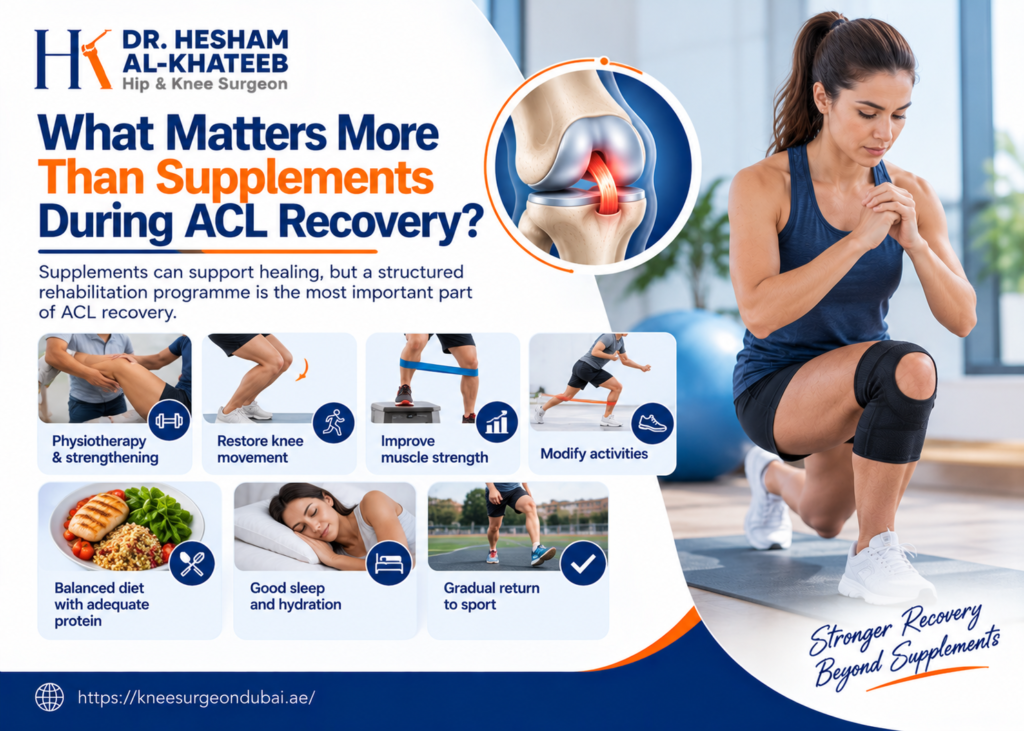
What matters more than supplements during ACL recovery?
Supplements are only one part of recovery. Supplements for ligament healing should complement, rather than replace, a structured rehabilitation programme. Rehabilitation remains essential after an ACL injury or reconstruction to restore knee strength, stability, movement, and function. Your recovery plan may include:
- Progressive physiotherapy and strengthening
- Exercises to restore knee movement
- Gradual improvement in muscle strength and control
- Appropriate activity modification
- Adequate protein and overall calorie intake
- Sufficient sleep and hydration
- Gradual return to sport when clinically appropriate
Nutrition and rehabilitation both play a role in ACL recovery. Getting enough protein while following a structured rehabilitation program may help maintain muscle mass and function. However, more research is needed to determine which supplement protocols, if any, can improve recovery or return to sport.
A simple nutrition approach during ACL recovery
You do not need a complicated supplement routine. Start with the basics:
- Eat enough calories to support recovery and your changing activity level.
- Include a protein source with regular meals and snacks.
- Eat a varied diet with fruits, vegetables, whole grains, and healthy fats.
- Include protein-rich foods such as eggs, fish, poultry, dairy, beans, and lentils.
- Choose foods containing omega-3 fats, such as oily fish, when appropriate.
- Stay adequately hydrated.
- Consider supplements when your diet or blood tests indicate a need for them.
As rehabilitation progresses, your nutritional needs may change with your activity level and training demands.
Nutrition that supports ACL recovery
Good nutrition can provide your body with the building blocks it needs during ACL recovery, but no supplement can replace appropriate medical care and rehabilitation. Protein, vitamin D, vitamin C, collagen, and omega-3 fatty acids may have a role in a broader recovery strategy, depending on your individual needs.
If you have an ACL injury or are recovering after reconstruction, schedule a consultation with Dr. Hesham Al-Khateeb to discuss your knee injury, treatment options, and recovery plan.
Why choose Dr. Hesham Al-Khateeb for ACL treatment?
The recovery plan for an ACL injury depends on more than the ligament tear alone. Factors such as injury severity, knee stability, activity level, associated injuries, and rehabilitation goals all help determine the appropriate treatment. Dr. Hesham Al-Khateeb carries out assessments and treatments for ACL injuries, giving each patient care that is based on their individual condition, activity level, and recovery goals.
- UK board-certified orthopaedic surgeon with 15+ years of experience.
- ACL reconstruction and sports injury care for athletes and active individuals.
- Minimally invasive and arthroscopic techniques when appropriate for the injury.
- Personalized treatment plans based on symptoms, activity level, and individual recovery goals.
- Focus on rehabilitation and return to activity, with treatment designed around restoring knee stability and function.
FAQs
Protein is a key nutritional priority during ACL rehabilitation because it helps maintain muscle while activity is reduced. Vitamin D may be useful if your levels are low, while collagen, vitamin C, and omega-3s may have a supporting role. The right supplements depend on your diet and individual needs.
Vitamin D is helpful in keeping the bones and muscles in good condition and can be prescribed when the levels are low. Vitamin C as well is necessary for the production of collagen and for normal tissue repair. Instead of taking several supplements without a clear need, focus on meeting your nutritional needs through a balanced diet and medical advice.
No supplement can repair a torn ACL by itself. Adequate protein and other essential nutrients can support muscle maintenance and normal recovery, while supplements for knee ligament recovery should be viewed as an addition to, not a substitute for, appropriate treatment and rehabilitation.
Collagen provides amino acids involved in connective-tissue formation, but research has not yet shown that it directly speeds ACL healing. If you choose to use collagen, it should complement your rehabilitation programme rather than replace the exercises and treatment recommended by your healthcare team.
About the author

Dr. Hesham Al-Khateeb
FRCS (Trauma & Orthopaedics) – UK
UK Board-Certified
15+ Years Experience
DHA Licensed – Dubai
Knee & Hip Specialist
Dr. Hesham Al-Khateeb is a UK board-certified orthopaedic surgeon specialising in knee and hip conditions, including knee replacement, ACL reconstruction, meniscus repair, cartilage restoration, and hip replacement surgery. Trained and certified in the United Kingdom, he brings internationally recognised surgical expertise to patients across Dubai and the GCC.
Currently practising at Emirates Hospitals Dubai, Dr. Hesham is known for personalised, evidence-based care — combining the latest minimally invasive and arthroscopic techniques with a focus on restoring long-term joint function and quality of life.
Medical Disclaimer
his article is for informational purposes only and is not a substitute for professional medical advice, diagnosis, or treatment. Always seek the advice of a qualified health provider with any questions you may have regarding a medical condition.
Medically reviewed by Dr. Hesham Al-Khateeb