
Hip Impingement: Symptoms, causes and treatment options

Medically Reviewed by
Dr. Hesham Al-Khateeb
FRCS (Orthopaedics) · UK Board-Certified
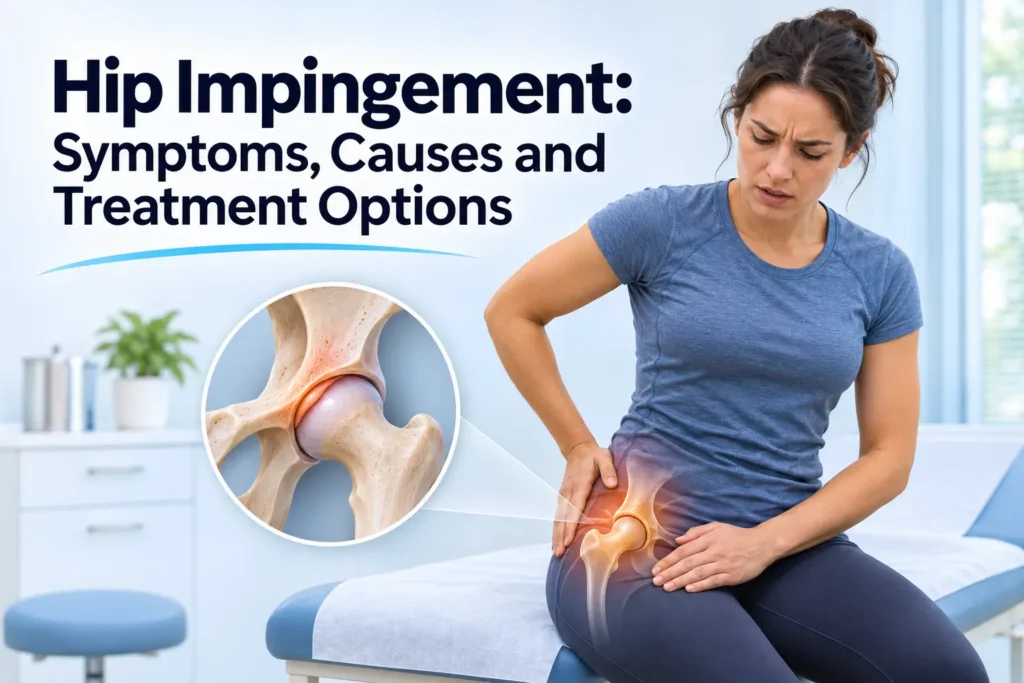
Hip Impingement: Know the symptoms, causes and suitable treatment options
Does your hip hurt after prolonged sitting, when you go up and down stairs or when you try to bend to tie your shoes?
If you are feeling a pinching sensation close to your groin, it may be due to hip impingement. Though it could feel like muscle tightness, persistent pain could be a sign that the hip joint moves abnormally.
Dr. Hesham Al-Khateeb is a UK board-certified orthopedic surgeon in Dubai, specializes in determining the cause of cause of hip pain and providing patient-specific orthopedic treatment and management. He takes into account the joint function, mobility and patient’s activities before recommending treatment.
This guide explains what is hip impingement, its symptoms, causes, diagnostic tests, and available treatments.
What is a Hip Impingement?
Hip impingement, medically called femoroacetabular impingement (FAI), occurs when the ball and socket of the hip joint do not fit or move together smoothly.
The resulting abnormal contact during certain movements can irritate the joint and sometimes damage the cartilage or labrum.
Hip impingement syndrome develops when these structural changes cause pain, restricted movement, or other symptoms.
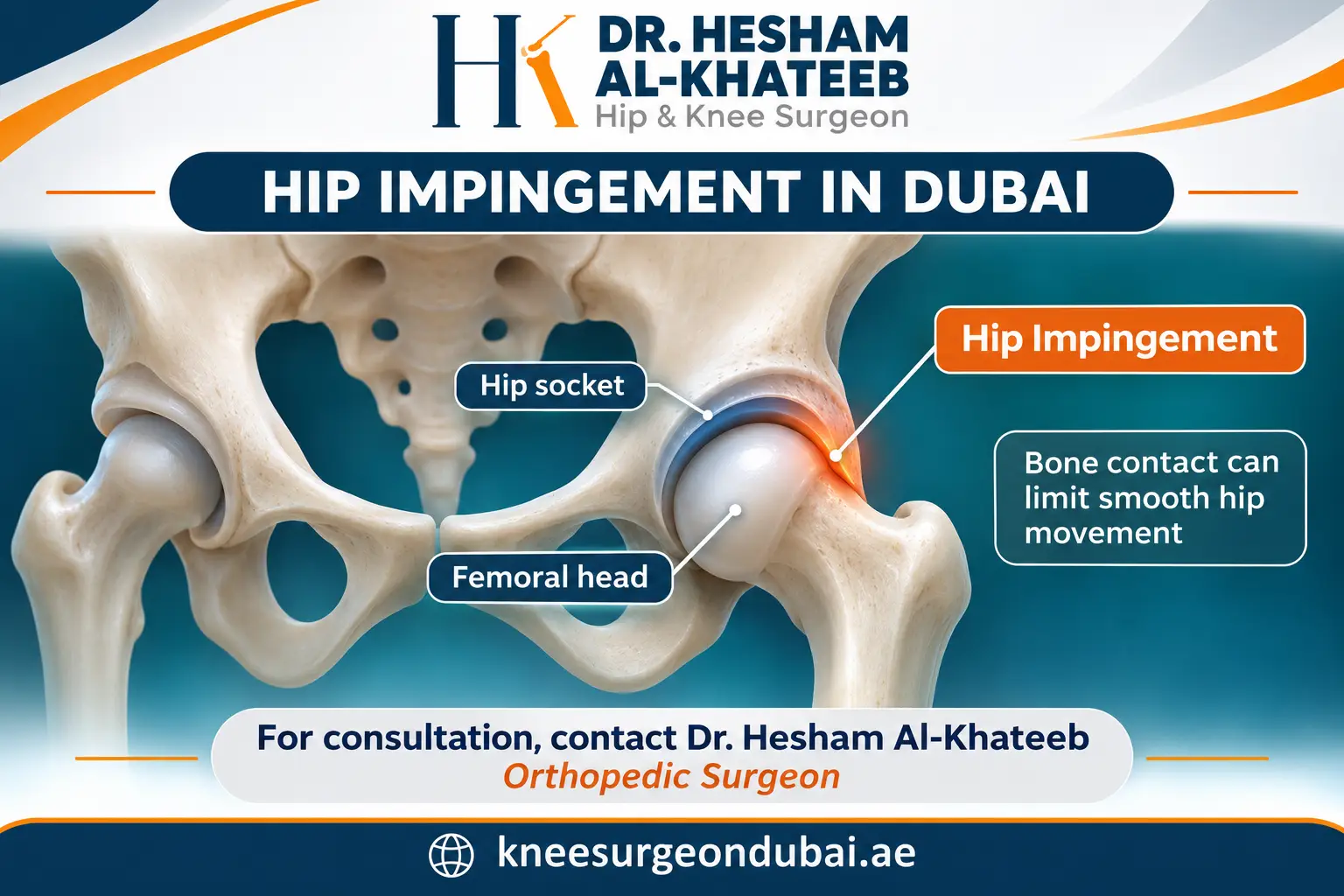
CAM vs Pincer Impingement
Type | What happens? |
CAM impingement hip | An irregularly shaped femoral head or neck contacts the socket during movement. |
Pincer impingement | Excessive coverage by the hip socket causes abnormal contact with the femoral neck. |
Mixed impingement | Both CAM and pincer abnormalities are present. |
CAM hip impingement is frequently identified in physically active individuals. However, structural changes alone do not always cause symptoms.
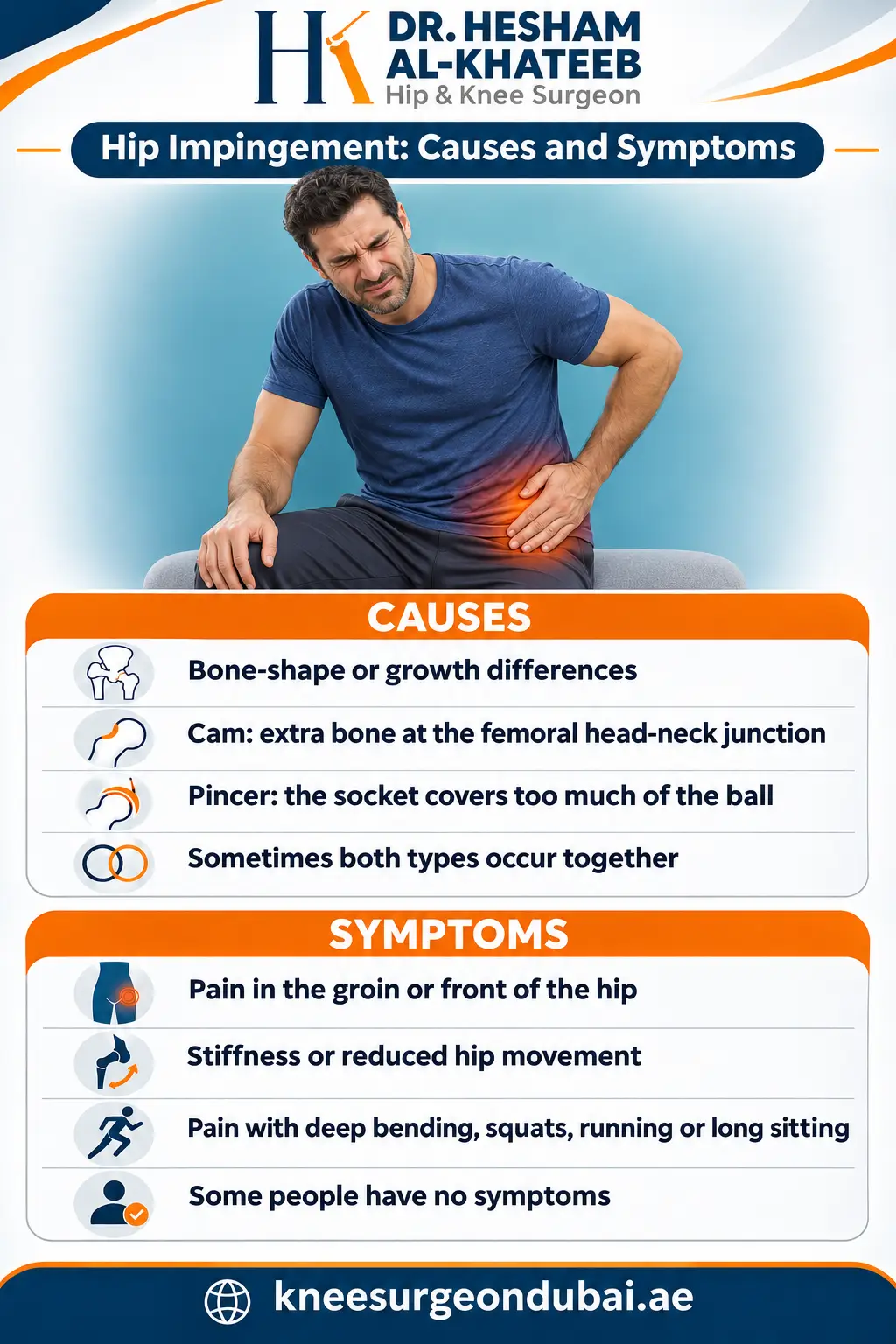
What causes Hip Impingement?
Femoral acetabular impingement is commonly associated with variations in hip bone shape that develop during growth.
Contributing factors include:
- Femoral head or acetabulum is not normal in shape
- Prolonged hip flexion and rotation during sports events
- Activities that are likely to exacerbate an existing structural issue
- Hip conditions that occurred prior to hip development
- Football, hockey and dancing athletes can experience symptoms sooner due to repetitive hip loading
Hip Impingement symptoms
The most common initial signs and symptoms of hip impingement occur when performing deep hip bending activities.
Watch for:
- Prolonged sitting, especially deep groin pain
- Discomfort on pinching when squatting
- Lack of hip motion or flexibility
- Clicking or catch sensations
- Running and twisting that causes pain
- Unable to get in or out of a car without help
Femoroacetabular impingement symptoms may affect either hip. Unlike structural FAI, hip nerve impingement involves nerve compression and may produce tingling, numbness, or radiating pain.
How is Hip Impingement diagnosed?
Diagnosis begins with a discussion of symptoms, physical examination, and imaging when indicated.
Hip Impingement Test
The FADIR test involves flexing, bringing inward, and internally rotating the hip.
A hip impingement test will be performed during this examination and may indicate FAI; however, this test alone cannot be used for diagnosis.
Additional investigations include:
- X-rays: To examine the shape of bones and the structure of the joints
- MRI: Check labrum, cartilage, and surrounding tissues
- CT scans: Occasionally help evaluate complex bony anatomy
Hip Impingement Treatment options
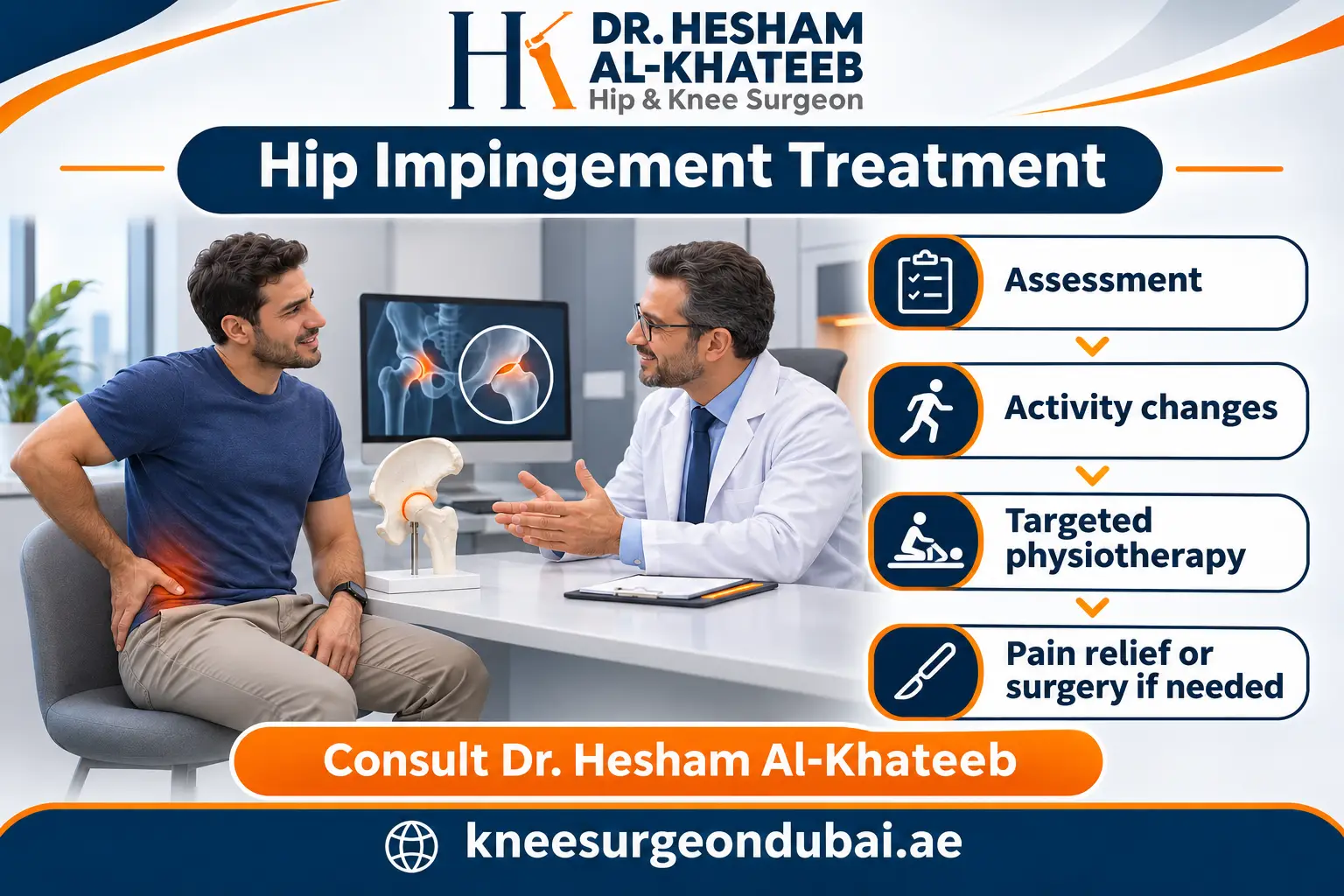
The appropriate hip impingement treatment depends on symptom severity, activity levels, and existing joint damage.
First-time femoroacetabular impingement treatment usually consists of:
- Substitution of activities that cause pain
- Physiotherapy for hip strength and control of hip movements
- Anti-inflammatory medication (if clinically appropriate)
- During the exercise session, the individual will adjust his or her exercise routine to avoid repetitive painful positions
- Selected cases may need image guided injections for symptom relief or diagnostic clarification
For patients wondering how to fix hip impingement, rehabilitation is often the first step.
When is Hip Impingement Surgery necessary?
Hip impingement surgery may be considered when pain and restricted movement persist despite appropriate nonsurgical treatment, particularly when clinical examination and imaging confirm symptomatic femoroacetabular impingement.
In such cases, surgery may be an appropriate option for treating hip impingement, depending on the severity of symptoms and the extent of joint damage.
Hip arthroscopy can address abnormal bone contact and associated labral damage in selected patients.
Surgery is not necessary for everyone with FAI hip impingement.
Why consult Dr. Hesham for Hip Impingement?
Dr. Hesham Al-Khateeb is a UK board-certified Orthopedic Surgery Consultant with over 15 years of experience in treating hip and knee conditions. His international training and experience in advanced hip procedures support a personalized approach to managing hip impingement.
His qualifications and clinical strengths include:
- International training: Trained at the Royal National Orthopaedic Hospital in London, with further fellowship training in Canada, Germany, and the USA.
- Recognized credentials: Holds FRCS (Trauma & Orthopaedics), UK board certification, and a DHA license in Dubai.
- Advanced hip surgery expertise: Trained in hip arthroscopy, direct anterior total hip arthroplasty, and complex hip reconstruction.
- Extensive clinical experience: Previously served as a Consultant Trauma and Orthopaedic Surgeon in Bahrain and a Senior Clinical Lecturer in Ireland.
- Individualized treatment: Focuses on accurate diagnosis, appropriate nonsurgical care, and surgical intervention when clinically indicated.
- Rehabilitation-focused approach: Considers each patient’s mobility, lifestyle, and functional goals when planning treatment.
When is Hip Impingement a medical issue that requires treatment?
If the groin pain is persistent, especially if it becomes uncomfortable when you move your leg around normally, it needs to be addressed.
Early treatment of hip impingement can help manage symptoms and enhance mobility, but results vary depending on the underlying joint condition.
If hip pain is affecting your daily activities, schedule a consultation with Dr. Hesham for an assessment and discussion of suitable treatment options.
FAQs
Does hip impingement go away?
Physiotherapy and activity modification may lead to improved symptoms. Overall, the bone shape stays the same.
What is Hip Impingement Syndrome?
It is a condition affecting the hip that is caused when the femoral head or neck rubs against the hip socket when moving.
Can hip impingement heal without surgery?
Many patients improve with conservative management, although structural abnormalities do not usually disappear.
Best treatment for hip impingement?
Treatment will depend on the symptoms, findings on examination, imaging and degree of joint damage.
Can walking aggravate the hip problem?
Walking is usually allowed, but may worsen symptoms with longer walks or some movements.
Does hip impingement happen in young adults?
Yes. Symptomatic FAI often occurs in younger, active persons.
What is the difference between CAM and pincer impingement?
CAM is a deformity of the head-neck junction of the femur and pincer impingement is caused by too much coverage of the socket.
Can hip impingement lead to knee pain?
Sometimes, hip joint issues occur as referred pain in the area of the thigh and knee.
What is the recovery time for hip impingement?
Recovery varies. A physiotherapy treatment plan can take several weeks or months, or even longer if it involves surgery.
Will hip impingement come back following treatment?
Symptoms can repeat if the damage to the joints remains or if activities continue to cause discomfort.
Stay Updated with Dr. Hesham Al-Khateeb
Add Dr. Hesham Al-Khateeb as a preferred source on Google to see the latest hip and knee health updates, treatment information, and expert orthopedic advice when you search.
About the author

Dr. Hesham Al-Khateeb
FRCS (Trauma & Orthopaedics) – UK
UK Board-Certified
15+ Years Experience
DHA Licensed – Dubai
Knee & Hip Specialist
Dr. Hesham Al-Khateeb is a UK board-certified orthopaedic surgeon specialising in knee and hip conditions, including knee replacement, ACL reconstruction, meniscus repair, cartilage restoration, and hip replacement surgery. Trained and certified in the United Kingdom, he brings internationally recognised surgical expertise to patients across Dubai and the GCC.
Currently practising at Emirates Hospitals Dubai, Dr. Hesham is known for personalised, evidence-based care — combining the latest minimally invasive and arthroscopic techniques with a focus on restoring long-term joint function and quality of life.
Medical Disclaimer
his article is for informational purposes only and is not a substitute for professional medical advice, diagnosis, or treatment. Always seek the advice of a qualified health provider with any questions you may have regarding a medical condition.
Medically reviewed by Dr. Hesham Al-Khateeb