
What Are The Reasons Behind Knee Pain After Workout?

Medically Reviewed by
Dr. Hesham Al-Khateeb
FRCS (Orthopaedics) · UK Board-Certified
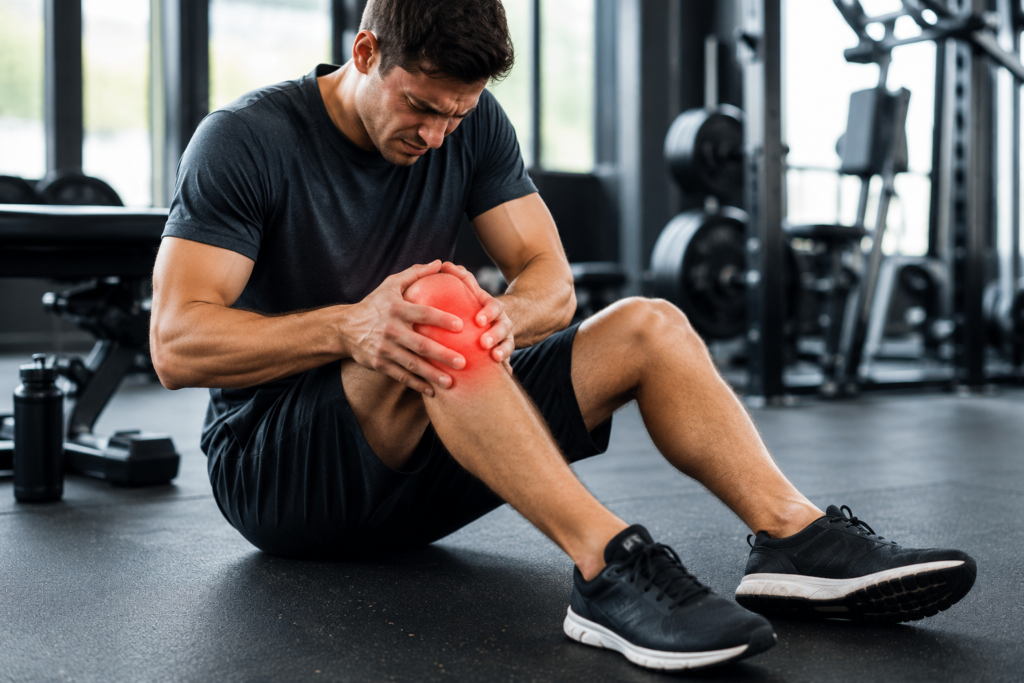
Knee Pain After Workout?
Pushing your limits at the gym or staying consistent with your fitness routine is something to be proud of. But when that sense of accomplishment is followed by discomfort or knee pain after workout, it can quickly turn into concern.
You’re not alone if you’ve ever questioned, “Why does my knee hurt after exercising?” One of the most frequent concerns among fitness enthusiasts, novices, and even seasoned athletes is knee pain following a workout. Persistent or intense pain is your body’s way of requesting attention, even though some degree of discomfort may be natural.
Let’s break down what’s happening, what’s normal, and when it’s time to take that next step toward expert care.
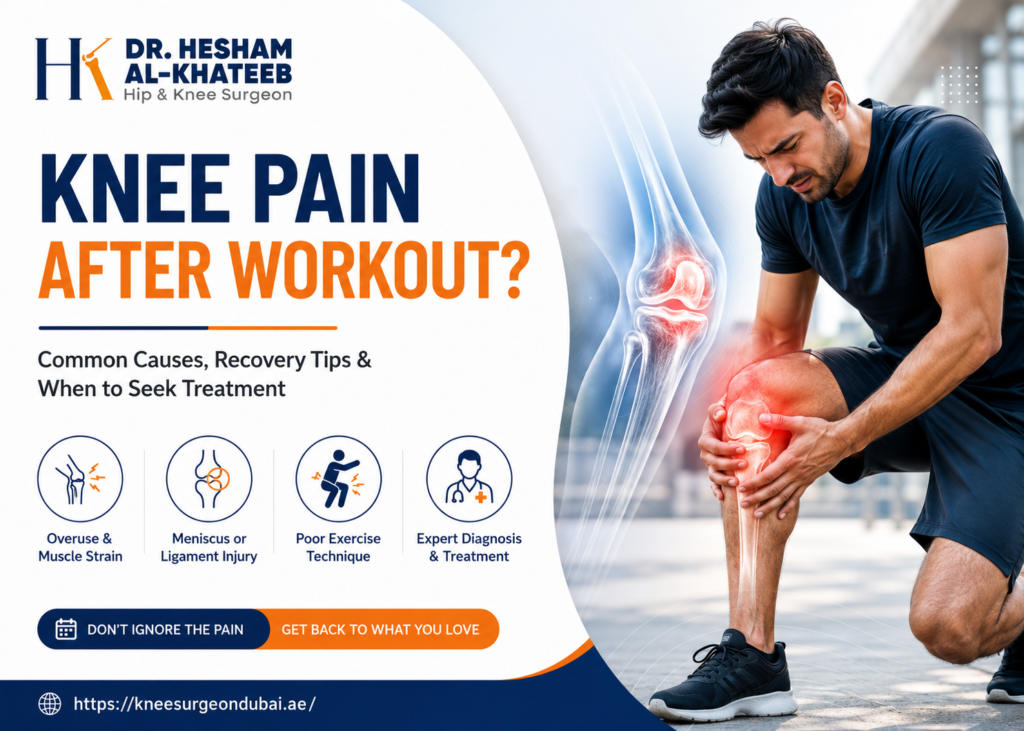
Understanding knee pain after workout: What is your body telling you?
The knee joint is one of the largest and most complex joints in the body, bearing significant load during most physical activities. Whether you’re running, lifting weights, or doing high-intensity interval training, your knees absorb repeated stress.
Knee Pain Trivia |
So, is knee pain after exercise normal? The answer depends on the type, intensity, and duration of the pain.
Common causes of knee pain after exercise: The subtle reasons you must gauge
Understanding the causes of knee pain after exercise can help you prevent long-term damage and train smarter.
- Overuse and repetitive stress
One of the most frequent reasons of knee pain during workout regimens is doing too much, too often. When you engage in repetitive activities like high-rep strength training, intense cycling, or long-distance running, your knee joint may not have enough time to heal. The soft tissues surrounding the knee, such as the tendons and bursae, may get irritated over time, resulting in a dull, persistent pain that usually gets worse with continuing movement.
- Poor form or technique
If your form is incorrect, even a well-planned workout might backfire. Uneven tension on the joint can result from subtle misalignments, such as pushing your knees too far forward during lunges or allowing them to cave inward during squats. This is a typical cause of knee pain that many people have after working out at the gym, even though they follow a set regimen. Inadequate mechanics can eventually wear out cartilage and strain ligaments.
- Weak supporting muscles
Your knees rely significantly on the surrounding muscles for support; they don’t function on their own. Your knee joint compensates if your quadriceps, hamstrings, or glutes are weak. This additional weight may put pressure on the joint, increasing its susceptibility to pain and damage. Knee pain following exercise is frequently greatly reduced by strengthening these muscle groups.
- Sudden increase in intensity or volume
Your joints may become overwhelmed by a sudden increase in exercise intensity, such as adding weights, running distance, or frequency of workouts. Ligaments and cartilage take longer to adjust than your muscles. The topic, “Why does knee hurt after exercising even when you feel fit?” is frequently addressed by this mismatch. Progression, not competence, is the problem.
- Underlying conditions or early wear and tear
Exercise isn’t necessarily the source of knee pain. Patellofemoral pain syndrome, sometimes known as runner’s knee, is an early indicator of osteoarthritis. These little ligament strains, nevertheless, could go unnoticed. Exercise can make these problems worse and make the discomfort more noticeable.
- Inadequate warm-up and mobility
Skipping a full warm-up is like expecting your body to perform without preparation. Tight muscles and inflexible joints hinder fluid mobility. This causes friction and tension within the knee. Even basic workouts might become uncomfortable if proper mobility is not maintained.
What exercises can cause knee pain?
If done incorrectly, the following types of exercise can cause knee pain:
- Deep squats with poor alignment
- Lunges with excessive forward knee movement
- Running on hard surfaces
- Jumping exercises (plyometrics)
- Leg press with excessive weight
That said, these exercises are not inherently harmful; the issue lies in execution, intensity, and individual biomechanics.
Is knee pain after exercise normal? Let’s break it down
Not all pain is a red flag. Here’s a quick comparison to help you identify what’s normal and what’s not:
Aspect | Normal Knee Pain After Exercise | Concerning Knee Pain After Exercise |
Sensation | Mild soreness or stiffness | Sharp, stabbing, or throbbing pain |
Duration | Resolves within 24–48 hours | Persists for several days or worsens |
Swelling | Minimal or none | Noticeable swelling or inflammation |
Mobility | Slight stiffness but manageable | Difficulty bending or bearing weight |
Activity Impact | Improves with light movement | Worsens with activity |
Sound | No unusual sounds | Clicking, popping, or grinding |
If you’re asking yourself, “What causes knee pain after a workout that doesn’t go away?”, this table should help you recognize when to take things seriously.
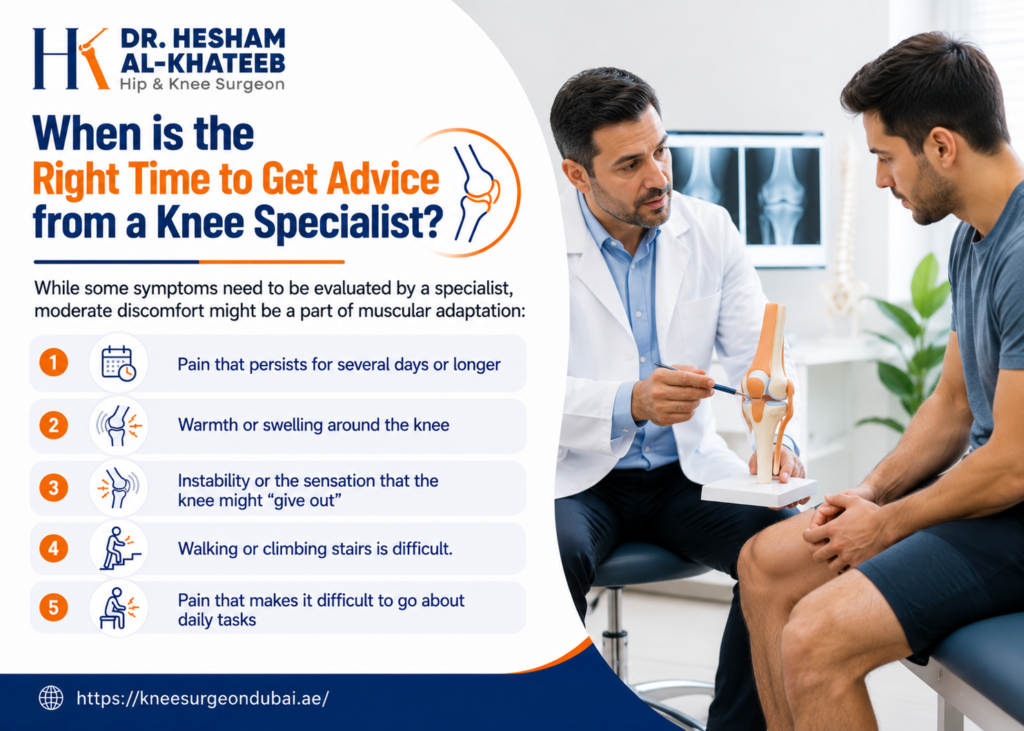
When is the right time to get advice from a knee specialist?
While some symptoms need to be evaluated by a specialist, moderate discomfort might be a part of muscular adaptation:
- Pain that persists for several days or longer
- Warmth or swelling around the knee
- instability or the sensation that the knee might “give out”
- Walking or climbing stairs is difficult.
- Pain that makes it difficult to go about daily tasks
Knee pain treatment options offered by Dr. Hesham
Ignoring these signs can lead to chronic issues or worsen underlying conditions. Early intervention is always the smarter approach.
Non-surgical treatment options for knee pain
The good news is that most cases of knee pain after workout can be managed without surgery.
- Rest and activity modification
Reducing intensity and allowing recovery time is often the first step.
- Physiotherapy
Targeted exercises help strengthen muscles and improve joint stability.
- Ice and Compression
Helps reduce inflammation and swelling after workouts.
- Anti-inflammatory medications
Used cautiously under medical supervision to manage pain.
- Bracing or support
Knee braces can provide stability during movement.
- Lifestyle adjustments
Weight management and proper footwear can significantly reduce stress on the knees.
Surgical treatment options: When advanced care is needed
In cases where the pain does not respond to conventional treatments, surgical intervention may be recommended.
Dr. Hesham specializes in advanced, minimally invasive orthopedic procedures tailored to each patient’s condition:
Arthroscopic Knee Surgery
This minimally invasive surgery is frequently used as the first line of surgical treatment when internal knee structures are compromised. Dr. Hesham can properly identify and treat concerns like cartilage loss, inflammatory synovial tissue, and loose pieces within the joint by using a tiny camera and specialized equipment. The benefits of arthroscopic knee surgery are – smaller incisions, a faster recovery time, less post-operative pain than traditional open surgery.
Ligament Reconstruction (ACL/PCL)
Ligament injuries, especially to the anterior cruciate ligament (ACL), are common among active individuals. If the knee feels unstable or gives way during movement, reconstruction may be necessary. Dr. Hesham uses advanced grafting techniques to rebuild the damaged ligament, restoring stability and enabling patients to safely return to sports or physical activity.
Meniscus Repair or Meniscectomy
The meniscus serves as a cushion in the knee joint, and even a minor rupture can produce severe discomfort, swelling, or locking sensations. Depending on the severity and location of the tear, Dr. Hesham may patch the meniscus to keep it functioning or gently remove the damaged section. The goal is to keep as much native tissue as possible for long-term joint health.
Cartilage Restoration Procedures
Cartilage damage can be especially difficult because it does not heal well on its own. Dr. Hesham uses specific procedures to regenerate or replace damaged cartilage, thereby relieving pain and improving joint movement. These procedures are especially advantageous for younger patients or those who wish to postpone joint replacement.
Partial or Total Knee Replacement
In cases where the knee joint has undergone significant degeneration, often due to advanced arthritis, a knee replacement may be the most effective solution. Dr. Hesham carefully evaluates whether a partial replacement (targeting only the damaged portion) or a total knee replacement is more suitable. These procedures are designed to relieve chronic pain, correct deformity, and significantly improve quality of life.
Every surgical plan is carefully created with the patient’s lifestyle, degree of activity, and long-term objectives in mind. Rather than only treating the illness, the objective is to rebuild mobility confidence.
These treatments are carried out with accuracy, with the goal of achieving a speedier recovery, minimizing scarring, and extending mobility.
Preventing knee pain after workout: Smart strategies
Prevention is always better than cure. Here’s how you can protect your knees:
- Warm up aptly before your workouts.
- Maintain the correct form during exercises.
- Strengthen the supporting muscles.
- Increase the intensity of your workout gradually.
- Wear the suitable footwear.
- Include rest days into your routine.
Listening to your body is key. Pain is not a sign of progress, it’s a signal for adjustment.
A thoughtful approach to recovery and care
Knee pain after workout sessions can feel frustrating, especially when you’re committed to staying active. But understanding the why behind the pain is the first step toward recovery.
Whether it’s a minor strain or something that needs expert attention, timely care can make all the difference.
Get rid of knee pain after workout - Achieve pain-free movement with Dr. Hesham Al-Khateeb
Your knees carry you through every step, every workout, and every milestone. If knee pain is holding you back, it’s time to address it with clarity and confidence.
Dr. Hesham Al-Khateeb combines clinical expertise with a patient-focused approach to deliver precise diagnosis and tailored treatment plans, whether non-surgical care or advanced surgical solutions.
Don’t let uncertainty or discomfort slow you down. Seek the right guidance, understand your condition, and take control of your mobility.
Book your consultation today and move forward, stronger, safer, and pain-free.
FAQs
If it hurts at the back of your knee while bending, it’s likely due to tendonitis, baker’s cyst, or knee injury. Consult a knee surgeon for treatment.
The sensation of a knee injury can vary depending on its cause. It might manifest as sharp, shooting pain, a dull ache, or a burning sensation. Swelling and tenderness to the touch are common symptoms of knee surgery. Additionally, you may experience difficulty bending, straightening, or putting weight on your knee.
If your knee cap hurts when you bend it, it’s likely due to patellofemoral pain syndrome, tendonitis, knee bursitis, or patellar fracture. Consult a knee surgeon for diagnosis and treatment.
Fixing your pain may include a combination of RICE, light physical activity, and strengthening the muscles around the knee. You also may need medication, physical therapy, or surgery.
About the author

Dr. Hesham Al-Khateeb
FRCS (Trauma & Orthopaedics) – UK
UK Board-Certified
15+ Years Experience
DHA Licensed – Dubai
Knee & Hip Specialist
Dr. Hesham Al-Khateeb is a UK board-certified orthopaedic surgeon specialising in knee and hip conditions, including knee replacement, ACL reconstruction, meniscus repair, cartilage restoration, and hip replacement surgery. Trained and certified in the United Kingdom, he brings internationally recognised surgical expertise to patients across Dubai and the GCC.
Currently practising at Emirates Hospitals Dubai, Dr. Hesham is known for personalised, evidence-based care — combining the latest minimally invasive and arthroscopic techniques with a focus on restoring long-term joint function and quality of life.
Medical Disclaimer
his article is for informational purposes only and is not a substitute for professional medical advice, diagnosis, or treatment. Always seek the advice of a qualified health provider with any questions you may have regarding a medical condition.
Medically reviewed by Dr. Hesham Al-Khateeb