
What Does A Torn Meniscus Look Like On The Outside?
Have you ever experienced a sudden feeling of popping in your knee, followed by sudden pain and swelling, particularly after twisting or squatting?
Studies estimate an incidence of approximately 61 cases per 100,000 people in the general population, with significantly higher rates observed in physically active individuals. Such symptoms can indicate a torn meniscus.
The meniscus is a small yet essential cartilage portion that cushions and stabilizes the knee joint. When it becomes torn, it can substantially impair mobility and reduce overall quality of life.
But patients often ask: What does a torn meniscus look like on the outside? Can we actually see it?
This blog will explore what a torn meniscus may look like externally, the symptoms that suggest it, and how it differs from other knee injuries. It will also discuss treatment options and recovery.
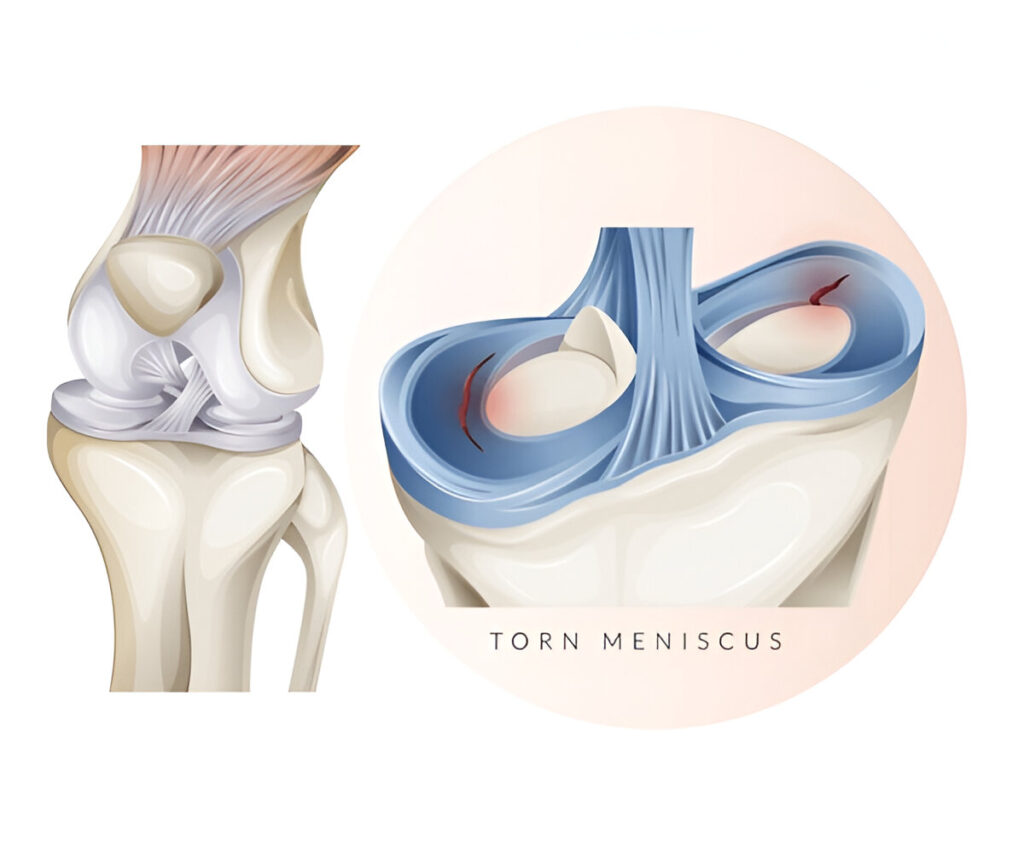
Understanding the Meniscus
The knee joint is supported by two menisci, which are crescent-shaped pads of cartilage placed between the thigh bone (femur) and the shin bone (tibia).
It is crucial for joint health because it cushions impacts, distributes body weight across joints, and improves overall stability during movement.
A meniscus tear can occur under several circumstances, including:
- Sudden twisting or pivoting movements – Frequently seen in athletes during sports activities.
- Excessive strain from deep squatting or lifting heavy objects.
- Age-related changes – Gradual degeneration of the cartilage that makes it more prone to tearing over time.
What Does a Torn Meniscus Look Like on the Outside?
A torn meniscus is not visible outside because the cartilage lies deep within the knee joint. Unlike a skin wound or bruise, you won’t see the actual tear externally.
However, the external appearance of your knee may provide important clues:
- Knee Swelling: One of the most common visible signs. The swelling may develop within 24–48 hours after injury due to fluid build-up.
- Puffiness Around the Joint Line: Especially noticeable along the inside (medial) or outside (lateral) edges of the knee.
- Difficulty Straightening the Knee: The joint may appear slightly bent or locked.
- Redness or Warmth: In acute cases, inflammation may cause the skin to feel warmer to the touch.
- Asymmetry: Compared to the other knee, the injured side may look bulkier, swollen, or misaligned.
So, while you will not see the actual torn cartilage, you will notice knee swelling, restricted motion, and abnormal knee contour on the outside.
Associated Symptoms
Along with external signs, patients often experience:
- A popping sensation at the time of injury
- Pain when twisting or rotating the knee
- Difficulty squatting or kneeling
- Catching or locking of the joint
- Tenderness along the joint line
Specific Tear Patterns and Their External Clues
Lateral Meniscus Tear
- Swelling is more prominent on the outer side of the knee
- Pain and tenderness when pressing the outer joint line
- Difficulty rotating the knee outward
Posterior Horn Medial Meniscus Tear
- Pain in the back or inside of the knee
- Swelling is noticeable when bending the knee deeply
- The knee may look stiff with restricted flexion
Tears Near the Knee Cap
- Swelling around the front of the knee
- Difficulty kneeling or climbing stairs
- The knee cap (patella) may appear puffy or surrounded by fluid
How Is It Different from Other Knee Injuries?
It’s easy to confuse a meniscus tear with:
- Ligament injuries (e.g., ACL tears): Often cause immediate swelling and instability.
- Patellar dislocation: The kneecap visibly shifts out of place.
- Arthritis-related swelling: Usually develops gradually over time.
A specialist examination is needed to differentiate these.
Diagnosis: Looking Beyond the Outside
Since a meniscus tear is not visible externally, diagnosis relies on:
- Physical examination – Checking joint line tenderness, swelling, and range of motion
- MRI scans – The gold standard for visualizing the exact tear (lateral, medial, posterior horn, etc.)
- X-rays – Used to rule out bone injuries, but not effective for cartilage tears
Treatment Options
The type of treatment depends on the type, size, and location of the tear, as well as the patient’s age and activity level.
- Conservative Care: Rest, ice, compression, elevation (RICE), anti-inflammatory medications, and physiotherapy.
- Injections: To reduce swelling and pain.
- Surgery:
- Meniscectomy – Removal of the torn portion.
- Meniscus repair – Suturing the cartilage is often preferred in younger patients.
- Meniscus replacement or transplantation – For severe cases.
Recovery
- Mild tears usually heal in a few weeks with conservative care.
- Surgical recovery usually takes 2–3 weeks, depending on the procedure.
- Physiotherapy is crucial to restoring strength and preventing future injuries.
When to See a Specialist
If you experience:
- Persistent knee swelling that doesn’t improve with rest
- Locking of the knee to fully straighten the knee
- Pain interfering with daily activities
- Recurrent knee instability
It is time to consult a knee specialist who has extensive expertise in treating meniscus injuries with advanced minimally invasive surgical techniques.
Why Choose Dr. Hesham Al-Khateeb for Meniscus and Knee Care
When it comes to knee injuries such as a torn meniscus, choosing the right specialist can make all the difference. Dr. Hesham Al-Khateeb is widely recognized as the best knee specialist in Dubai and brings unmatched expertise and global training to his patients.
Here’s why patients trust Dr. Hesham for advanced orthopedic care:
- World-Class Training: Trained at the prestigious Royal National Orthopaedic Hospital in London and further specialized through the renowned Adult Reconstruction Fellowship in Canada.
- International Expertise: Enhanced his surgical skills in leading centers, including Germany’s ENDOKlinik and Seattle’s Harborview Hospital, mastering advanced procedures such as hip arthroscopy and direct anterior total hip arthroplasty.
- Extensive Experience: Served as a consultant for trauma and a specialist orthopedic surgeon, contributing both in practice and academia.
- Research and Recognition: Actively engaged in clinical research, earning international acclaim and multiple awards for his contributions to orthopedic medicine.
- Comprehensive Orthopedic Expertise: Specializes in hip and knee replacements, meniscus repair, and sports injuries, ensuring patients receive tailored, evidence-based treatment.
- Patient-Centered Approach: Known for delivering excellent outcomes, focusing on restoring mobility, reducing pain, and improving quality of life.
With his extensive background and commitment to innovation, Dr. Hesham stands as a beacon of trust, skill, and excellence in orthopedic care. For anyone seeking the best knee doctor in Dubai, he offers expertise, compassion, and advanced medical care.
Recognizing and Managing a Torn Meniscus
To address the central question, what does a torn meniscus look like on the outside?
The tear is not visible, as it lies deep within the knee joint. However, external signs such as swelling, puffiness, stiffness, and changes in knee contour often serve as important indicators.
When these physical changes are accompanied by pain, locking, or restricted mobility, they strongly suggest a potential meniscus injury.
Prompt diagnosis and suitable treatment are vital to maintaining knee function, minimizing the risk of long-term issues like osteoarthritis, and facilitating a complete return to activities.
If you suspect a meniscus tear, it is essential not to delay a professional evaluation. Book a consultation today with Dr. Hesham in Dubai to ensure access to expert assessment and advanced treatment options tailored to your condition, helping you regain mobility and maintain joint health.
Knee pain doesn’t have to limit your life. With Dr. Hesham Al-Khateeb’s world-class expertise, you can restore mobility, prevent long-term damage, and return to the activities you love.
FAQs About Torn Meniscus
Many patients can still walk, but movement may cause pain, stiffness, or locking.
Small tears on the outer edge may heal naturally due to better blood supply. Larger tears usually require medical or surgical intervention.
Persistent swelling accompanied by joint locking, catching, or localized pain along the joint line often indicates a meniscus tear.
It typically shows as a dark or irregular line within the meniscus structure, confirming the exact tear location.
Surgery is not always recommended. Some tears can improve with rest and physiotherapy, but complex or symptomatic ones may require surgical repair.
A torn meniscus itself cannot be seen from the outside of the knee joint, as the cartilage is located deep within the joint. However, external signs such as swelling, puffiness around the joint line, stiffness, and limited range of motion may suggest a possible tear.
Torn meniscus symptoms from the outside often appear as visible swelling, mild redness, or warmth around the knee. The knee may also look bulkier than the other side, and patients frequently have difficulty straightening or bending it fully.
A lateral meniscus tear usually presents as swelling and tenderness on the outer part of the knee joint. The knee may look puffy in that region, and patients often report pain when twisting or pressing on the lateral joint line.
In a posterior horn medial meniscus tear, swelling is typically seen at the back and inner part of the knee. Patients may notice stiffness, restricted bending, and pain when placing weight on the affected leg.
A torn meniscus near the knee cap may appear as swelling or puffiness in the front of the knee. Patients often struggle with activities such as kneeling, squatting, or climbing stairs, and the knee may look enlarged compared to the other side.
Yes, a torn meniscus frequently causes visible knee swelling on the outside. This swelling usually develops within 24 to 48 hours after the injury and is one of the most common external indicators of meniscus damage.